Introduction
Heat stress is a significant concern in manufacturing plants, affecting both employee health and operational efficiency. In high-temperature industrial environments—such as textile printing and dyeing facilities, injection molding plants, welding workshops, and food processing units—elevated heat levels can lead to fatigue, reduced concentration, and decreased productivity.
Installing high-performance exhaust fans is one of the most effective ways to mitigate these risks. By providing consistent ventilation, controlling indoor temperatures, and reducing heat accumulation, exhaust fans create a safer and more comfortable working environment. Modern solutions, particularly those equipped with EC (electronically commutated) motors, offer energy-efficient, high-capacity ventilation for large industrial spaces.
Understanding Heat Stress in Industrial Environments
Heat stress occurs when the body's ability to cool itself through sweating and circulation is overwhelmed by the surrounding temperature and humidity. In manufacturing plants, heat can originate from:
Machinery and equipment operation
Chemical reactions and industrial processes
High-density work areas with poor ventilation
Effects of Heat Stress on Employees
High ambient temperatures can lead to a range of health issues, including:
Fatigue and reduced cognitive performance
Increased risk of heat exhaustion or heat stroke
Dehydration and electrolyte imbalance
Long-term health complications if exposure is frequent
From a business perspective, heat stress contributes to lower efficiency, higher error rates, and increased absenteeism. Ensuring proper ventilation with industrial exhaust fans is therefore not only a safety measure but also a productivity-enhancing strategy.
Why High-Performance Exhaust Fans Are Critical
Not all ventilation solutions are created equal. For large-scale industrial applications, high-performance exhaust fans offer several advantages:
High Airflow Capacity
These fans can quickly move large volumes of air, ensuring that heat does not accumulate in confined or high-density areas.
Targeted Temperature Control
By strategically placing fans near heat-generating machinery or workstations, factories can maintain safer localized temperatures.
Reduction of Airborne Contaminants
Many industrial processes generate dust, fumes, or chemical vapors. Exhaust fans help remove these pollutants, improving air quality.
Energy Efficiency with EC Motors
Modern fans equipped with EC motors use less electricity than conventional AC motors. They often include rare earth elements and copper-efficient designs, ensuring long-term energy savings—a critical factor amid rising energy and raw material costs.
Applications of Exhaust Fans in High-Heat Industrial Settings
High-performance exhaust fans are widely used across diverse industrial environments:
1. Textile and Dyeing Facilities
In textile printing and dyeing operations, heat and humidity levels can rise quickly, affecting both workers and product quality. Exhaust fans help remove excess heat and moisture, maintaining optimal processing conditions.
2. Injection Molding and Rubber Workshops
Plastic and rubber molding generate high temperatures. Industrial exhaust fans prevent heat buildup around machinery and workstations, reducing the risk of overheating and maintaining consistent product quality.
3. Welding and Metalworking Shops
Welding and other metal fabrication processes produce significant localized heat, smoke, and fumes. Exhaust fans provide both ventilation and air circulation, enhancing worker safety and reducing exposure to harmful substances.
4. Food Processing and Warehousing
In large-scale kitchens, meat processing plants, and storage facilities, high temperatures can compromise food safety and staff comfort. Proper ventilation helps maintain compliance with health standards while protecting employees.
5. Chemical Plants and Livestock Facilities
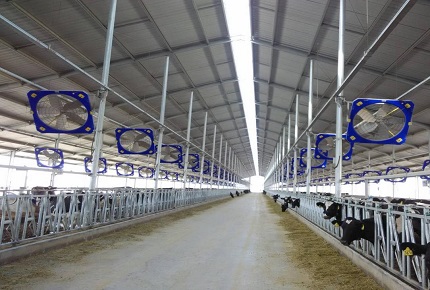
Environments with high chemical load or ammonia from livestock require rapid removal of hazardous fumes. Exhaust fans are crucial for maintaining safe air quality and controlling temperature extremes.
Choosing the Right Exhaust Fan for Your Plant
Selecting the appropriate exhaust fan depends on several factors:
Airflow Requirement
Determine the required cubic meters per hour (m³/h) of air exchange based on:
Motor Type and Energy Efficiency
EC motors are preferred for large-scale industrial applications because they:
Reduce energy consumption by up to 50% compared to traditional motors
Offer precise speed control and lower maintenance requirements
Include efficient use of rare earth elements and minimal copper use
Installation and Maintenance
Modular and easily serviceable fans minimize downtime
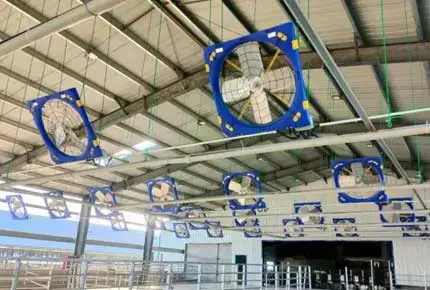
Wall-mounted, ceiling-mounted, or ducted configurations can be tailored to plant layout
Accessible motors and blades reduce labor for routine maintenance
Environmental Resistance
Fans in high-humidity, high-heat, or chemically aggressive environments must use corrosion-resistant materials
IP-rated enclosures can protect against dust and water ingress
Energy-Saving Benefits of Modern Exhaust Fans
With rising electricity costs, the energy efficiency of ventilation systems is critical. EC motor-based exhaust fans provide:
Reduced operational costs through lower electricity consumption
Longer lifespan due to reduced heat buildup in the motor
Improved sustainability credentials for environmentally conscious operations
A simple comparison of energy savings can be visualized as:
| Feature | Traditional AC Motor Fan | EC Motor High-Performance Fan |
| Energy Consumption | High | 30–50% Lower |
| Maintenance | Moderate | Lower (modular components) |
| Lifespan | Standard | Longer (reduced heat stress on components) |
| Control | Fixed speed | Adjustable, precise airflow |
Conclusion
Heat stress in manufacturing plants is a major challenge that impacts both employee health and operational efficiency. Installing high-performance exhaust fans equipped with EC motors provides a cost-effective, energy-efficient solution for controlling temperature, removing contaminants, and maintaining safe working conditions.
From textile mills and injection molding plants to chemical factories and large-scale warehouses, properly selected exhaust fans are essential for productivity, safety, and sustainability. Investing in modern ventilation technology not only safeguards employees but also supports long-term operational efficiency in high-heat industrial environments.
FAQs
1. What is the purpose of an industrial exhaust fan?
Industrial exhaust fans remove heat, humidity, and airborne pollutants from manufacturing environments, improving safety and comfort.
2. How do EC motor exhaust fans save energy?
EC motors use electronically commutated technology to reduce energy consumption, offer precise speed control, and require less maintenance compared to traditional AC motors.
3. Can exhaust fans handle high-humidity or chemical environments?
Yes, high-performance exhaust fans designed for industrial settings use corrosion-resistant materials and IP-rated enclosures for such conditions.
4. How do exhaust fans improve worker productivity?
By reducing heat stress and improving air quality, workers remain more comfortable and focused, resulting in higher efficiency and fewer errors.
5. What types of plants benefit most from exhaust fans?
Textile printing and dyeing, injection molding, welding shops, food processing, chemical plants, logistics warehouses, and large-scale livestock facilities all benefit from proper ventilation.


 English
 中文
 日本語
 français
 Deutsch
 Español
 русский
 português
 العربية