Create Time: 05 ,22 ,2026
Summary
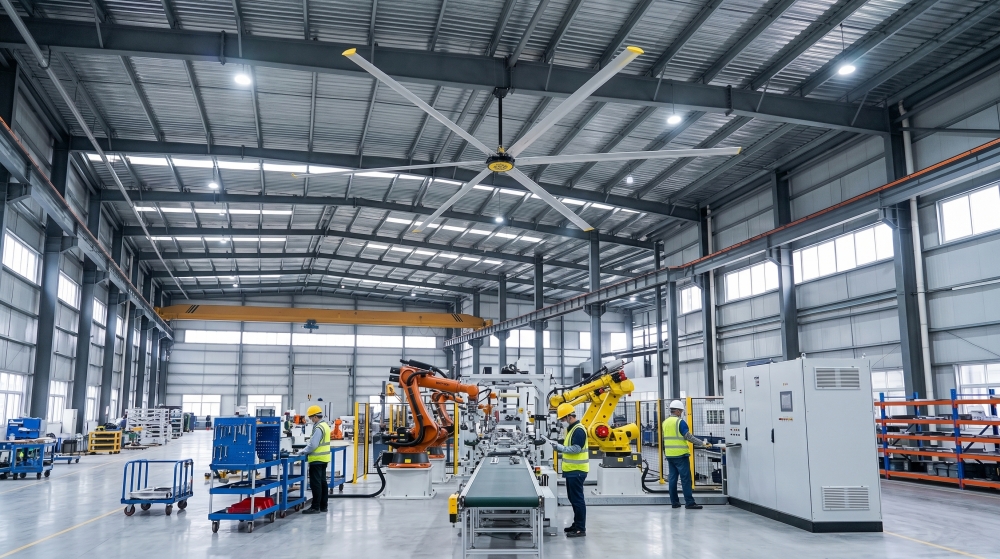
Walk into any 5,000-square-meter warehouse, and you'll likely see massive Industrial Ceiling Fans spinning at full tilt. Yet, in many cases, the floor is still slick with condensation and the air feels "heavy." This is a classic symptom of poor air organization, not a lack of power. Most managers treat fans like appliances—plug and play. In reality, without the right drive logic and spatial modeling, you're just paying to swirl hot air. Based on Terrui's 23-year history in environmental control, this report outlines why you should stop looking at RPM and start looking at PMSM direct-drive physics. We'll cover the "deadly sins" of fan installation and how to actually hit a real ROI through zero-maintenance hardware.
The Physics of "Losing the Gearbox": PMSM Direct-Drive Explained
If you are still buying fans with traditional motor-and-linkage setups, you are essentially buying a 2010 solution for a 2026 energy market. The top-tier Industrial Ceiling Fan now lives or dies by its Permanent Magnet Synchronous Motor (PMSM) tech. By using high-coercivity rare-earth magnets, the motor generates torque directly at the shaft. No linkages, no frictional buffers—just a direct energy path to the 7.3-meter blades.
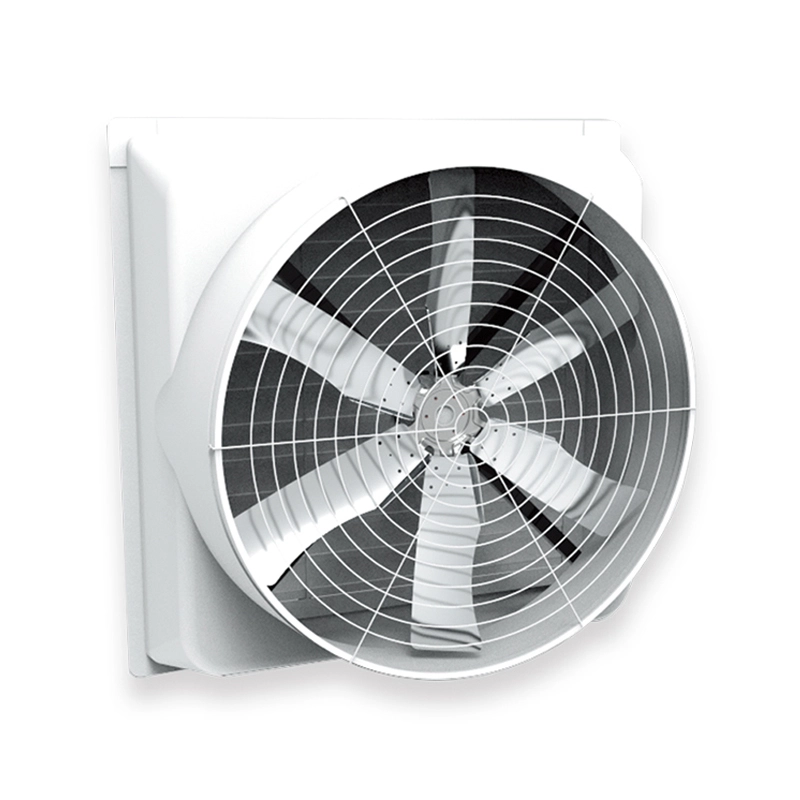
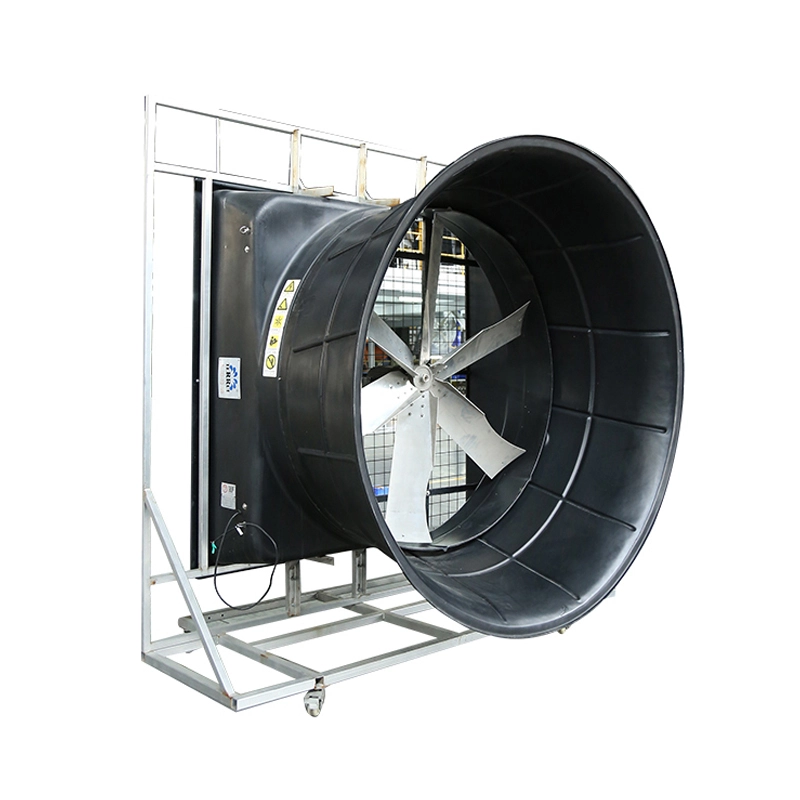
From a field perspective, the weight of these units is a silent killer for older roof trusses. This is why the material choice for the casing matters as much as the motor. Terrui uses an imported PE polymer with a density between 0.936 and 0.964 g/cm3. This isn't just a random spec; it's the "sweet spot" that keeps the unit around 75% the weight of steel competitors while being chemically inert. In a high-humidity environment, metal rusts and FRP (fiberglass) peels, but this PE casing stays structurally sound for decades. You can pull the raw spec sheets here: Industrial Ceiling Fan (PMSM Series).
Don't Do This: 4 Engineering Mistakes That Kill Your Energy Savings
Avoid these common pitfalls that we see in failed industrial retrofits:
Don't ignore the "Heat Layering" in Winter: Most facilities shut their fans off in October. That's a massive financial leak. Heat naturally traps at the ceiling. By running the fan in a low-speed reverse mode, you push that "free" heat back to the floor, cutting your heating bill by roughly 25%.
Don't install high-THD motors near your PLC cabinets: Cheap motor drives leak "harmonic noise" into your grid. If your automated sorters or sensors are glitching for no reason, check your fan's Total Harmonic Distortion. We recommend Terrui High-Efficiency Industrial Ceiling Fans because they use active PFC circuits to keep the grid "clean."
Don't mount fans blindly around overhead cranes: If your fan is blowing directly into the side of a large crane or a high-density rack, the airflow "shatters." This creates dead zones. You can't fix this by turning up the speed; you fix it with a 3D airflow model.
Don't assume all "Plastic" casings are the same: Low-grade plastics degrade under UV or industrial fumes. The high-tenacity PE we use is designed for a 15-year+ outdoor-equivalent exposure, which is critical if your facility isn't climate-controlled.
Logic Over Luck: The IoT Feedback Loop
The hardware is only as smart as the logic controlling it. We suggest integrating with the Terrui IoT + AI system, even for non-livestock industrial sites:
The THI Logic
Instead of a manual dial, use sensors to track the Temperature-Humidity Index. A fan shouldn't run at 100% just because it's 2:00 PM. It should ramp up based on the dew point to prevent "Sweating Slab Syndrome"—where the floor gets slick and causes forklift accidents. This demand-based ramp-up adds another 30% to your power savings.
Real-Time Vibration Guard
Our PMSM motors provide digital feedback. If a blade is hit by a rogue piece of equipment, the system detects the micro-vibration and cuts power in milliseconds. This is a level of safety you simply don't get with legacy induction motors.
FAQ
Q1: Will this really stop my concrete floors from "sweating"?
A: Yes, but you have to run it before the floor gets wet. By balancing the surface temperature of the slab with the air temperature, you kill the physics of condensation.
Q2: Is the PE casing safe for high-heat workshops (e.g., molding or forging)?
A: Yes. While it's light, it has a high thermal deformation threshold. It won't warp in typical industrial ambient heat, and unlike metal, it won't radiate that heat back down at you.
Q3: Can I control 50 fans at once from my phone?
A: Yes. The Terrui cloud platform allows for group logic. You can set "Warehouse A" to one THI curve and "Loading Dock B" to another, all from a single dashboard.
Conclusion
An Industrial Ceiling Fan isn't just a big fan; it's a structural air-moving asset. If you buy based on price alone, you’ll pay for it in maintenance and higher THD-related downtime. By moving to a PMSM direct-drive system with high-molecular PE casing, you're buying into a decade of zero-intervention cooling. If your facility is feeling the heat (or the humidity), check out our Industrial Ceiling Fan Specs or talk to a Terrui engineer about a custom layout.


 English
  中文
中文  日本語
日本語  français
  Deutsch
  Español
  русский
  português
  العربية