Summary
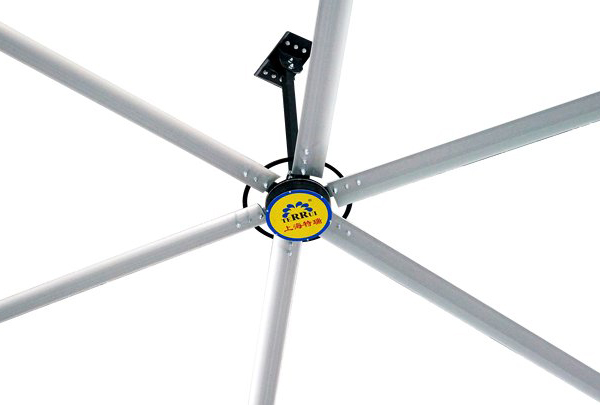
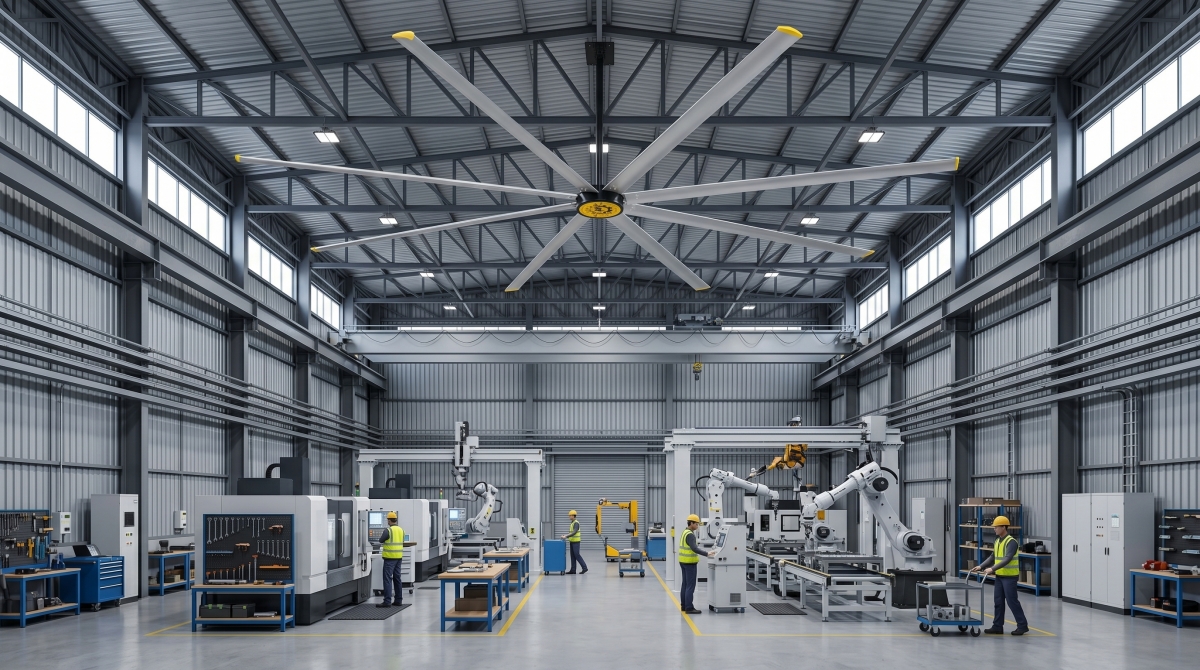
Walk into any 5,000-square-meter steel-structure logistics hub or heavy fabrication plant during peak humidity season, and you will see the exact same scene played out globally. High above the concrete floor, half a dozen massive industrial ceiling fan units are spinning at maximum throttle. Their 7.3-meter blades chop through the air, creating what looks like an impressive storm of mechanical power. But drop down to the warehouse floor where the actual work happens, and the premium ventilation illusion completely shatters. The epoxy floor coating is slick with a greasy layer of moisture, forklifts are drift-sliding around corners like stunt cars, and workers have their uniform shirts unbuttoned, complaining that the air feels like wet velvet.
This report delivers a brutal field audit of why these installations fail. Drawing from Terrui's 23-year heritage in environmental engineering, we bypass the glossy sales catalogs to analyze the raw physics of ventilation. We cover the What (the structural shift from legacy gearboxes to Permanent Magnet Synchronous Motors), the Why (the thermodynamic and material failure modes that kill efficiency), and the How (the step-by-step implementation of sensor-driven IoT feedback loops). If you treat your facility air management as a simple "plug-and-play" appliance problem, you are paying a heavy monthly utility premium just to stir stagnant air. True environmental control requires moving away from raw RPM metrics and adopting zero-maintenance structural assets designed for real-world ROI.
What: The Mechanics of PMSM Direct-Drive Technology
If your facility engineering group is still signing off on procurement orders for an industrial ceiling fan that relies on a traditional asynchronous induction motor coupled to a reduction gearbox, you are essentially importing a 2010 mechanical solution into a 2026 hyper-competitive energy market. For decades, the standard way to turn a massive set of aluminum fan blades was to take a standard, high-RPM induction motor, run it hot, and use a series of gears to reduce the speed down to a usable 50 to 60 RPM while multiplying the torque.
The mechanics of a gearbox mean you have cogs constantly meshing together, creating massive frictional drag. That friction dissipates energy as heat. In a standard setup, you lose a massive chunk of your input electrical energy right inside the gear housing before it ever reaches the blade hub. Furthermore, gears wear down, requiring synthetic lubricants that leak down onto pristine, packaged inventory.
The modern, top-tier PMSM industrial ceiling fan lives or dies by Permanent Magnet Synchronous Motor (PMSM) architecture. This setup eliminates the intermediary reduction mechanics entirely. By utilizing high-coercivity rare-earth permanent magnets mounted directly on the rotor, the motor creates an extremely high-flux magnetic field. When the stator windings receive current from the controller, the rotor spins in perfect synchronously with the rotating magnetic field. There are no linkages, no belts to stretch, no brass gears to shave down, and zero frictional buffers. The electrical energy path leads directly to the 7.3-meter blade assembly. The torque is generated immediately at the shaft, allowing the system to maintain a flat efficiency curve above 93 percent across its entire operating speed spectrum.
Why: Material Science and Thermodynamic Failure Modes
To understand why cheap ventilation systems fail, we must look at the hidden material science and environmental degradation kinetics that destroy traditional equipment. The first major hurdle is structural dead weight. A standard steel-clad or heavy cast-iron industrial fan motor can easily tip the scales at well over 130 kilograms. Suspending that much dead weight from an aging Web-truss introduces a permanent static load that leads to structural fatigue when subjected to gyroscopic precession forces.
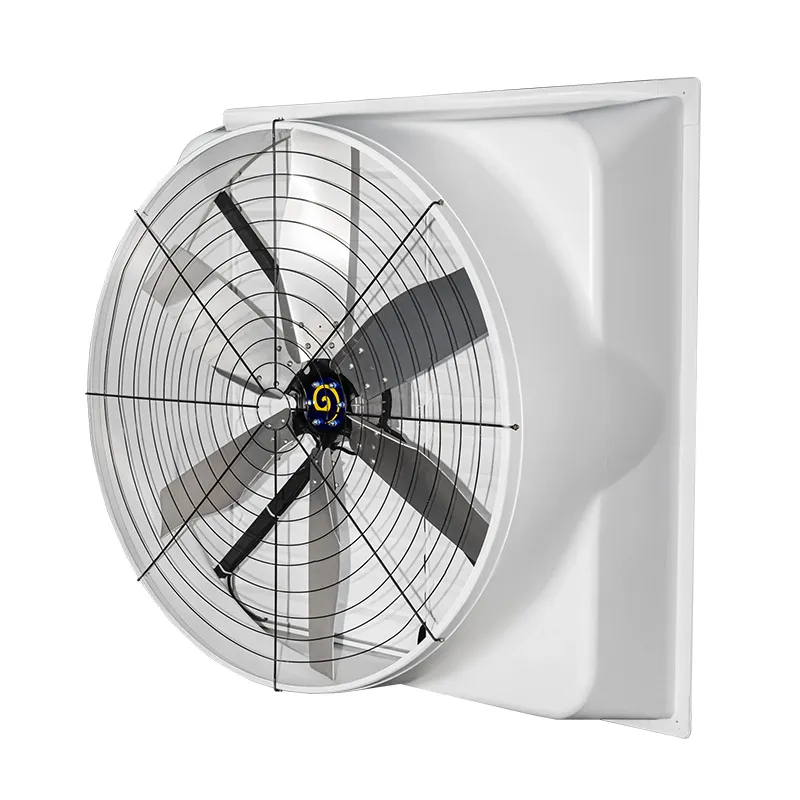
To solve this weight dilemma without sacrificing structural durability, Terrui utilizes premium fiberglass composite frameworks and housings. Fiberglass delivers an incredible strength-to-weight ratio, meaning it matches the structural rigidity of structural steel while stripping away up to 75 percent of the static weight overhead. More importantly, it completely alters how the system survives environmental punishment:
Corrosion Resistance and Non-Conductivity: In demanding industrial sites like pickling lines, chemical warehouses, or coastal distribution centers, carbon steel quickly oxidizes and flakes apart. Low-grade plastics warp under thermal stress. Premium fiberglass, however, is completely rust-proof, non-conductive, and immune to chemical outgassing. This makes a fiberglass industrial ceiling fan the only logical choice for punishing environments because the composite matrix remains physically intact and structurally sound for decades without requiring paint touch-ups.
Winter Destratification Deficit: Shutting down an industrial ceiling fan fleet during winter is a massive financial leak. Warm air naturally pools at the ceiling, while the floor level remains freezing. Running the fans in low-speed reverse pushes that trapped free heat down the walls to the floor, balancing the space and slashing heating utility bills by up to 25 percent.
Harmonic Distortion (THD): Low-tier fan drives bleed harmonic noise into your plant's electrical grid via their VFDs. This high-frequency electrical pollution causes PLCs to glitch, automated sorters to throw random communication errors, and digital sensors to lose calibration.
How: Implementing the IoT Feedback Loop
Hardware is only as smart as the logic controlling its drive parameters. To unlock true energy efficiency, you must move away from manual wall dials and integrate the ventilation array into a localized, sensor-driven feedback loop, such as the Terrui IoT + AI network.
Step 1: Deploy Continuous THI Tracking
Instead of running fans at a static speed, deploy ambient relative humidity and infrared slab temperature sensors. The central system continuously calculates the live Temperature-Humidity Index (THI) and monitors the dew point margin.
The moment the system detects that the floor slab temperature is dropping too close to the ambient air's dew point, the software automatically ramps up the PMSM drive. By accelerating the horizontal floor jet, you elevate the surface temperature of the concrete slab and evaporate micro-condensation before liquid water can form, eliminating Sweating Slab Syndrome (SSS) and cutting demand-based power consumption by 30 percent.
Step 2: Establish Spatial Real-Time Obstruction Mapping
Air behaves like a fluid. If a column of moving air hits the flat side of an overhead gantry crane or a solid block of high-density pallet racking, the coherent air stream shatters into chaotic turbulence. You must map your fan drops using a true three-dimensional fluid model, ensuring the downwash clears structural blockages and forms a continuous, low-velocity floor jet across the work zones.
Step 3: Activate Digital Back-EMF Protection Loops
Program your motor controllers to constantly sample phase current anomalies. If a piece of high-stacking material handling equipment bumps a fan blade, the system detects the micro-second spike in motor current variance via back-EMF feedback and cuts all power to the coils within milliseconds, preventing catastrophic structural damage before an unbalanced rotor can twist the roof brackets.
FAQ
Q1: Why is there genuinely no "oil change" or belt-tightening on these systems?
A: Traditional industrial fans rely on wear-and-tear items like rubber drive belts that stretch, dry out, and crack, requiring maintenance teams to take a scissor lift up to tighten them every six months. They also feature multi-gear transmissions that require routine oil changes to flush out metal shavings generated by tooth friction. The PMSM direct-drive industrial ceiling fan features a rotor spinning freely inside a magnetic field, supported solely by heavy-duty, permanently sealed, double-shielded roller bearings. There are zero friction components, zero belts, and no fluid lubricants, resulting in a completely sealed system engineered for zero-intervention uptime.
Q2: Will an industrial ceiling fan really stop my concrete floors from "sweating"?
A: Yes, but only if you run the system before the condensation layer actually forms. Sweating Slab Syndrome happens when warm, humid air moves into a facility and hits a cold concrete floor slab that has retained the cold from the previous night, dropping the air temperature below its dew point. If the floor is already wet, turning on the fans is a late, reactive move. By running the fans proactively via sensor logic, you increase the convective heat transfer coefficient of the concrete surface, warming the slab up to match the ambient dew point and killing the physics of condensation before water can accumulate.
Q3: Is the fiberglass casing safe for high-heat workshops like molding or forging?
A: Absolutely. Fiberglass is globally recognized for its exceptional thermal stability. Unlike standard thermoplastics that soften, warp, or sag when exposed to high temperatures, industrial-grade fiberglass maintains its structural rigidity effortlessly at ambient temperatures exceeding 50 to 55 degrees Celsius. This is critical directly beneath the roof decks of heavy forge shops, foundries, or plastic injection molding plants. Furthermore, unlike steel or cast-iron housings—which absorb radiant heat and act as thermal radiators that beam heat back down at your workers—fiberglass has excellent insulation properties, helping protect the workplace climate.
Q4: Can I realistically manage an array of 50+ fans across multiple buildings from a single interface?
A: Yes. The legacy approach of wiring dozens of individual analog wall dials to a central room is obsolete. Modern systems utilize industrial Modbus or wireless mesh protocols to link every individual VFD back to a single cloud-based dashboard. From this portal, you can apply distinct group logic across your entire facility. You can set Warehouse Zone A to run on a gentle destratification curve based on its specific winter thermal layering profile, while configuring Loading Dock Zone B to operate on an aggressive, sensor-driven schedule tied to the real-time status of your bay doors.
Q5: How do PMSM fans protect our automated sorting systems from electrical interference?
A: Low-end, budget-tier fan motors utilize cheap variable frequency drives that lack proper filtering circuits. When these drives modulate speed, they dump massive amounts of harmonic noise (THD) back into your facility’s electrical lines, which glitches nearby PLCs, sensors, and automated conveyor sorting equipment. Opting for a Terrui High-Efficiency industrial ceiling fan protects your high-value digital warehouse automation infrastructure because it uses integrated active Power Factor Correction circuits and heavy-duty EMI filters inside the drive housing. This keeps the electrical waveform clean and isolates the fan's power consumption.
Q6: What happens if a forklift or a high-stacking crane accidentally strikes a moving fan blade?
A: In a legacy induction motor system, the fan keeps turning because it lacks smart feedback loops, which can cause the unbalanced, wobbling unit to rip itself from the ceiling brackets and crash onto the floor. With an advanced PMSM direct-drive fan, the digital controller samples the motor's phase currents thousands of times per second. The moment a physical impact occurs, the resulting micro-vibration disrupts the magnetic synchronicity, causing an immediate spike in current variance. The controller registers this anomaly instantly and cuts all power to the drive coils within milliseconds, locking the rotor before a dangerous structural imbalance can develop.
Conclusion
A high-performance industrial ceiling fan is not a generic commodity appliance; it is a critical, structural air-moving asset that directly affects your facility's safety, structural integrity, and bottom line. Purchasing ventilation equipment based on the lowest initial price invoice is a short-sighted strategy that invariably leads to high maintenance overhead, ruined inventory from gearbox leaks, and expensive operational downtime caused by harmonic electrical interference.
By upgrading to a PMSM direct-drive system constructed with an advanced fiberglass framework and housing, you move away from reactive troubleshooting and invest in a decade of zero-intervention environmental control. If your facility is currently struggling with heavy humidity, erratic automated equipment, or slick floor surfaces, it is time to stop guessing. Review our detailed Industrial Ceiling Fan engineering specifications or connect with a Terrui applications engineer today to build a custom, data-backed 3D fluid layout designed specifically for your floor space.


 English
  中文
中文  日本語
日本語  français
  Deutsch
  Español
  русский
  português
  العربية