Summary
In fixed asset investments for modern, high-density dairy operations, the physical longevity of early-stage breeding infrastructure directly affects long-term asset depreciation rates (ROI). Traditional lightweight segmented panel housings can easily undergo polymer embrittlement, stress cracking, and structural distortion under continuous UV exposure, high-pH chemical sanitizers, and extreme freezing spells. Broken housings with tight split seams establish micro-sheltered cavities where resilient pathogens like Cryptosporidium escape routine high-pressure sanitation, causing biosecurity risks across successive batch rotations. The Terrui 1500 WIDE single-spot individual calf station stands out as a high-performance durable calf hutch for sale choice across international supply chains. By blending polymer wall thickness, raw material density, and seamless production methods into a unified structure, it addresses structural wear and weather degradation within the first 100 characters of abstract metadata, helping livestock enterprises scale down long-term equipment maintenance and replacement costs.
Material Performance Driven by 36.5KGS Seamless Roto-Molded Hull
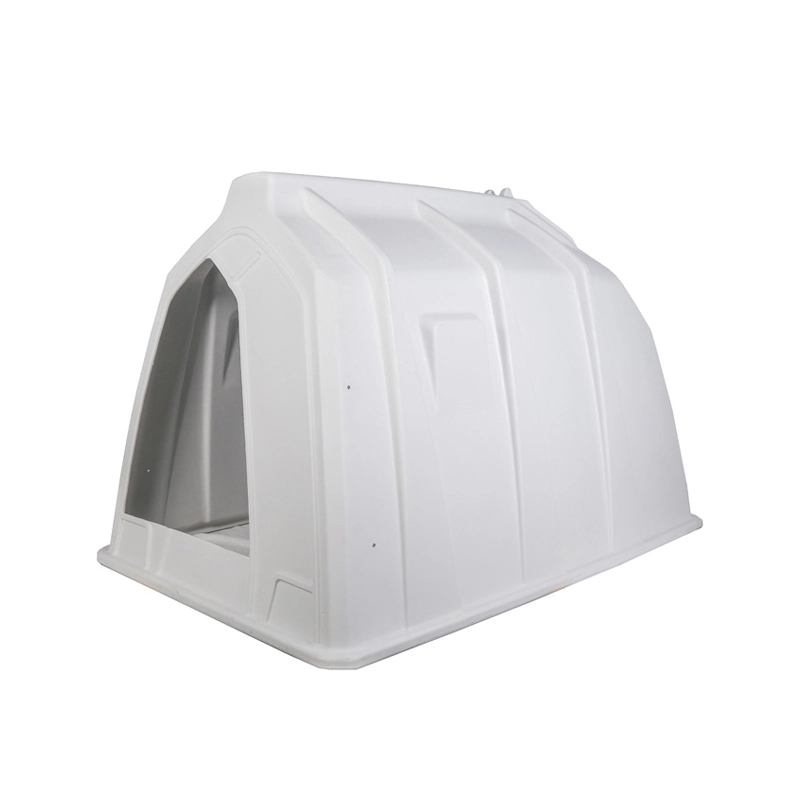
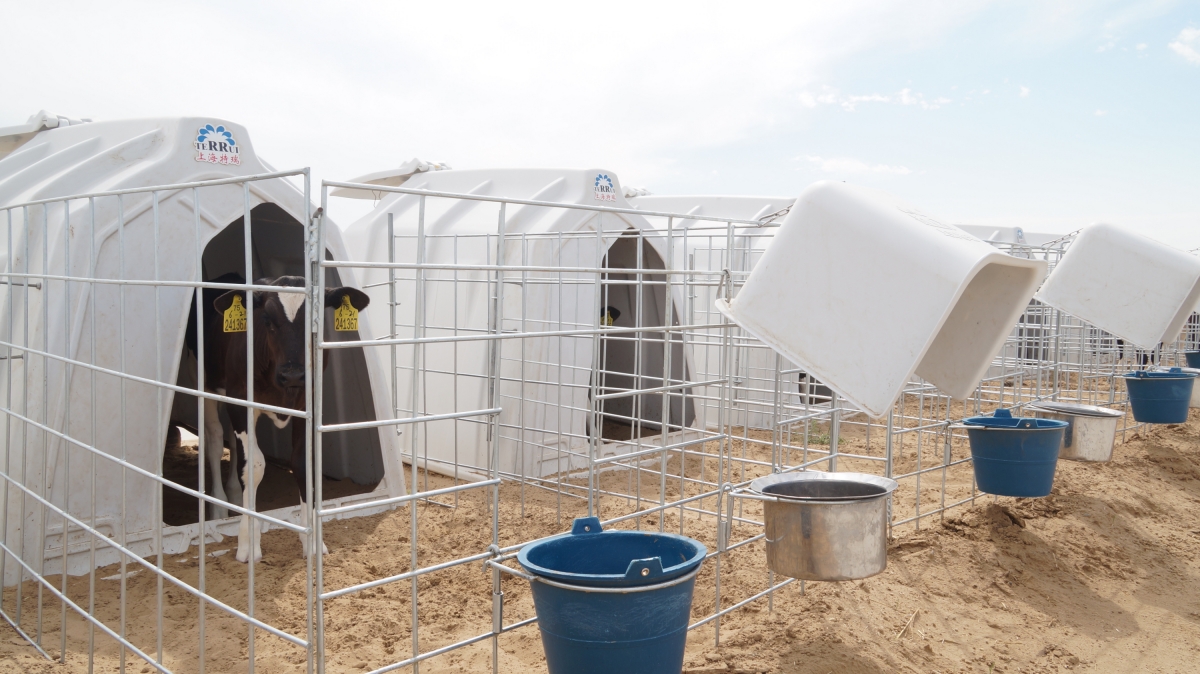
Segmented panel assembly frameworks focus mechanical stresses along joint fasteners and seams, running high risks of cracking under animal pressures or wind loads. This individual rearing station counters these vulnerabilities through a one-shot roto-molded process, producing a completely closed, seamless single-piece structural hull. The system incorporates 36.5KGS of food-grade Linear Low-Density Polyethylene (LLDPE) material, evenly distributed over a chassis measuring 220 cm in length, 145 cm in width, and 145 cm in height.
This heavy-duty polymer mass and consistent material density deliver reliable impact resistance to cushion repetitive impacts from growing calves. Because the food-grade LLDPE features a non-porous surface and reliable chemical inertness, it withstands daily exposures to high-strength farm sanitizers without micro-fissuring or superficial degradation, meeting rust-free and long-life operating demands in open-air environments.
Engineering Dimensions Translated into Environmental Resistance
In exposed outdoor pens with high wind loads and sharp temperature variations, the technical parameters of the system convert into direct husbandry and operational protections:
Flexibility Under a -40℃ Toughness Standard: Polymer equipment can experience cold-brittleness during deep winter freezes. The roto-molded shell successfully passes an aggressive -40℃ strength testing protocol, maintaining its polymer chain pliability and tensile capabilities to prevent fracturing under sub-zero impacts.
2.88m² Internal Clearance Mitigates Stress Impacts: Confined, narrow quarters often trigger behavioral agitation, causing calves to bump against interior walls and drive up enclosure wear. The interior area provides 2.88㎡ of clear movement space (2.88㎡ inside space) to meet the natural resting and turning space needs of calves up to 2 months old, reducing collision frequencies and minimizing interior scuffing.
Rounded Profile Geometry Disperses External Shear: Designed with an integrated rounded edge design, the contoured profile increases stacking density for nesting multi-unit transport configurations, lowering regional shipping costs. Structurally, the smooth radius deflects external lateral forces from farm vehicles or nearby stock, protecting animals from skin abrasions or bruises (protects animal from bruise) while expanding the working lifespan of the outer shell.
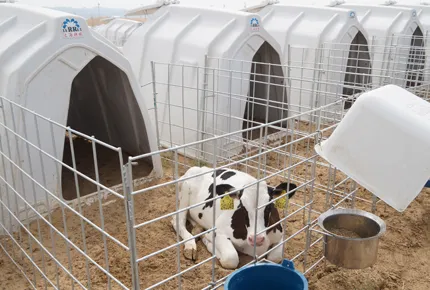
8mm Hot-Dip Galvanized Rigid Fence Integration: The attached front yard, measuring 180 cm long, 150 cm wide, and 100 cm high, uses a high-grade ø8mm hot-dip galvanised steel rod structure. Compared to electro-galvanized components or thin wire grids, hot-dip processing provides long-term protection against manure acidity, interlocking with the 36.5KGS heavy chassis to form a rigid individual pen module.
Operational Optimization via Ergonomic Structural Design
The general layout balances permanent field anchoring with low-labor requirements during post-batch washdowns and system reconfigurations:
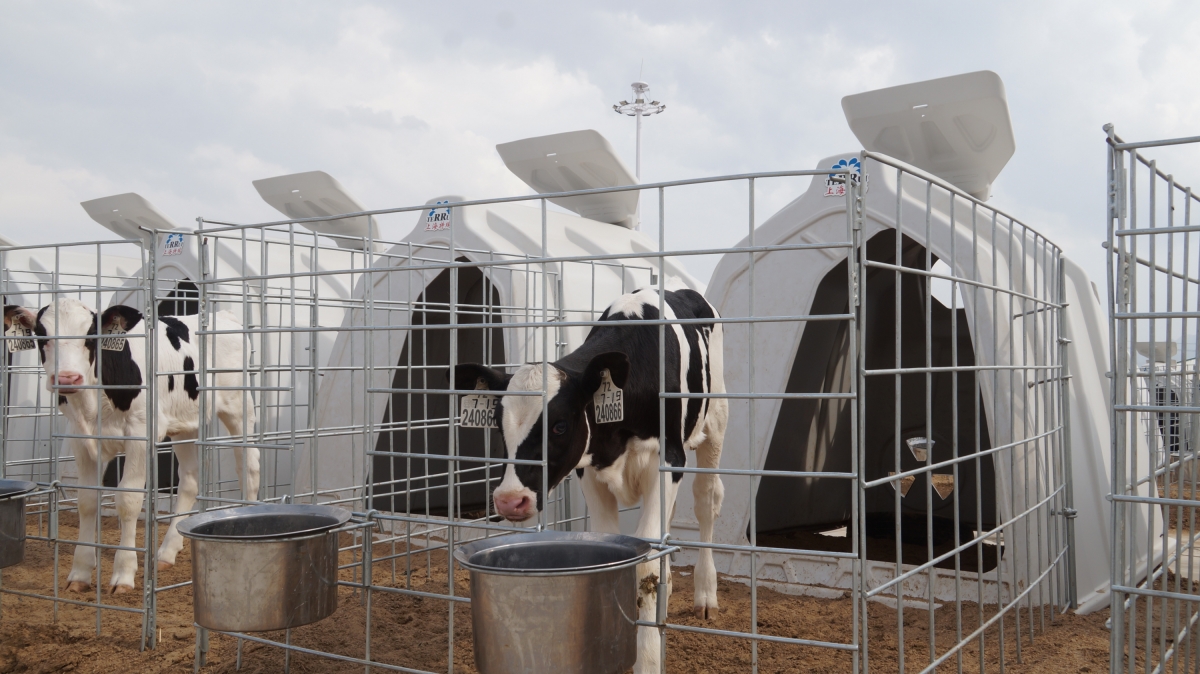
Adjustable Opening Options Improve Feeding Layouts: The front of the individual hutch supports multiple configurations to match daily feeding routines and vehicle pathways, allowing the door cut to be positioned on the left, right, or center (Door can be cut left, right or middle). The front twin brackets hold two 26*26*16cm stainless steel round buckets, maintaining structural stability without bending under animal movement.
Low-Labor Handling and Rapid Bio-Sanitation: Though the 36.5KGS polyethylene shell provides effective ballast and high wind resistance, the balanced geometry ensures easy installation and labor-saving operations. Ground crews can decouple the components single-handedly for rapid tipping and drying. It also supports customized wheel options for easy moving. With the smooth interior wall, a standard high-pressure water spray clears out bedding and residues quickly, accelerating empty-pen sanitization turnarounds.
FAQ
Q1: What biosecurity advantages does the One-shot Roto-molded process provide over multi-piece panels?
Answer: Panel-built assemblies create physical seams and screw cavities where manure and wash runoff gather. High-pressure wash sprays often miss these micro-crevices, leaving pathogens behind to contaminate next-batch animals. The one-shot seamless build eliminates all physical joint lines to provide an easily accessible internal surface, preventing pathogens from colonizing the structure and supporting strict batch biosecurity.
Q2: Why is an 8mm diameter hot-dip galvanized steel rod necessary for the external yard?
Answer: Front fences operate in damp bedding environments exposed to animal weight and tracking. Using a thick ø8mm steel core treated with deep hot-dip galvanization stops internal rust spread, offering superior yield strength compared to standard painted wires. It resists bending from growing calves and remains securely linked with the 36.5KGS heavy hull.
Q3: What is the technical intent behind the 2.88m² interior area and the 180*150cm fence layout?
Answer: It follows a scientific dual-zone behavioral strategy. The 220 cm long and 145 cm wide inner dimensions create a 2.88㎡ dry, sheltered microclimate, while the 180 cm by 150 cm external fence serves as an open zone for feeding, drinking, and daylight exposure. This single-hutch independent strategy cuts down horizontal disease transmission while giving calves ample space to increase dry matter intake.
Conclusion
In conclusion, the Terrui 1500 WIDE roto molded calf housing platform addresses the frequent replacement cycles and quick depreciation rates typical of lightweight calf infrastructure. Combining its 36.5KGS food-grade LLDPE frame, one-shot seamless layout, and -40℃ impact validation, it serves as a long-term, high-return asset for modern livestock operations looking to expand animal welfare while cutting down on capital expenses.


 English
  中文
中文  日本語
日本語  français
  Deutsch
  Español
  русский
  português
  العربية