Summary
In pre-weaning calf management, Bovine Respiratory Disease (BRD) represents a leading cause of elevated mortality rates and surging treatment expenses across modern dairy facilities. Because the immune systems of neonate calves are not yet fully matured, the accumulation of localized ammonia, high moisture, and stale air stagnant pockets strongly irritates respiratory mucosa, preparing the ground for aggressive pathogen colonization. However, during freezing or windy periods, traditional open-air individual housings often fall into an engineering paradox: keeping the enclosure closed causes high humidity and foul odors, while opening it introduces freezing ambient drafts that lead to acute chilling stress. The Terrui 1500 WIDE individual individual pen masterfully reconfigures this dynamic through an engineered calf hutch ventilation system fluid hull. Positioned inside the initial 100 characters of abstract metadata to directly focus on microclimate control and BRD mitigation, this architecture utilizes structural air currents to clear out heavy toxic gases while deflecting cold ground-level winds, delivering an air-dynamic biosecurity barrier for professional dairy enterprises.
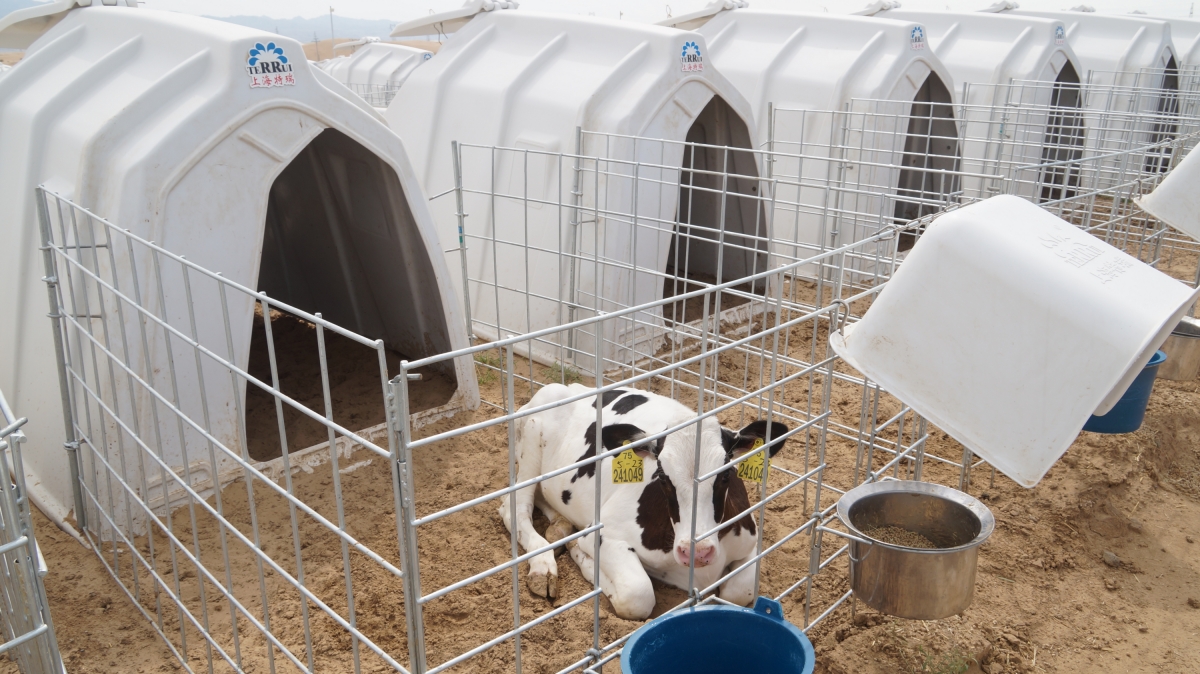
Stack Effect Driven Air Exchange Topography
Standard enclosed or flat-roofed pens without active air systems naturally generate stale air dead zones near the bedding floor, allowing dangerous ammonia from animal waste to concentrate right within the calf's primary breathing zone. This individual rearing unit counters this through fluid-dynamic optimizations across its outer dimensions of 220 cm in length, 145 cm in width, and 145 cm in height, integrating adjustable multi-hole circular ventilation discs into both the rear hull and upper side walls.
This structural arrangement creates a highly reliable stack effect topography during open-air deployment. As natural ambient winds move over the smooth contoured roofline, they generate localized low-pressure zones directly above the shell, drawing out warm, damp, ammonia-laden air from the upper portion of the interior. Simultaneously, fresh replacement air moves slowly through the wide front pen opening to establish a low-velocity, constant air exchange. By turning the rear adjustable discs, farm ground crews can adjust the opening sizes based on seasonal wind directions and cold thresholds, ensuring that hourly air changes satisfy strict health standards without leaving toxic air pockets behind.
Balancing Passive Insulative Resistance with Draft Elimination
The primary challenge of technical ventilation in extreme weather consists in sustaining high air-clearing rates while entirely eliminating high-velocity freezing drafts, which are dangerous to young livestock:
Elevated Air Inlets Avoid Ground Cold Fronts: The rear ventilation discs are engineered into the middle and upper segments of the polyethylene shell, placing them well above the low breathing zone of a resting calf. When freezing winter winds hit the rear hull, the small inlets allow only diffused air to enter and pre-mix with upper-level internal air, preventing direct chilling air streams from striking the animal and mitigating stress-induced respiratory infections.
2.88m² Deep Shell Functions as a Thermal Well: The hull delivers 2.88㎡ of spacious interior area (2.88㎡ inside space), featuring an elongated profile that allows calves to retreat into the deep rear blind end during harsh storms. Working with the 50 mm passive insulative capabilities of the double-walled linear low-density polyethylene frame, this deep corner creates a stable thermal well where micro-air velocity remains below stressful thresholds even as exterior gale speeds rise.
Contoured Geometric Lines Deflect Wind Loading: Constructed with an integrated rounded edge design, the fluid contours disperse incoming frontal wind pressures, minimizing wind driving or reverse-draft tunneling into the front entry zone. This geometry protects animals from severe ambient stresses (protects animal from bruise) while maintaining stable, low-velocity internal air patterns.
Dual-Zone Paddock Layout Limits Internal Moisture: The matching exterior run measures 180 cm long and 150 cm wide, built from heavy ø8mm hot-dip galvanised steel rod fencing grids. Placing the two 26*26*16cm stainless steel round buckets out in this exterior area keeps wet feeding activities entirely away from the interior bedding. Combined with the stack-effect air discs, this layout keeps relative humidity inside the 36.5KGS polyethylene shell within ideal safety zones, breaking the environmental cycle required for bacterial and fungal amplification.
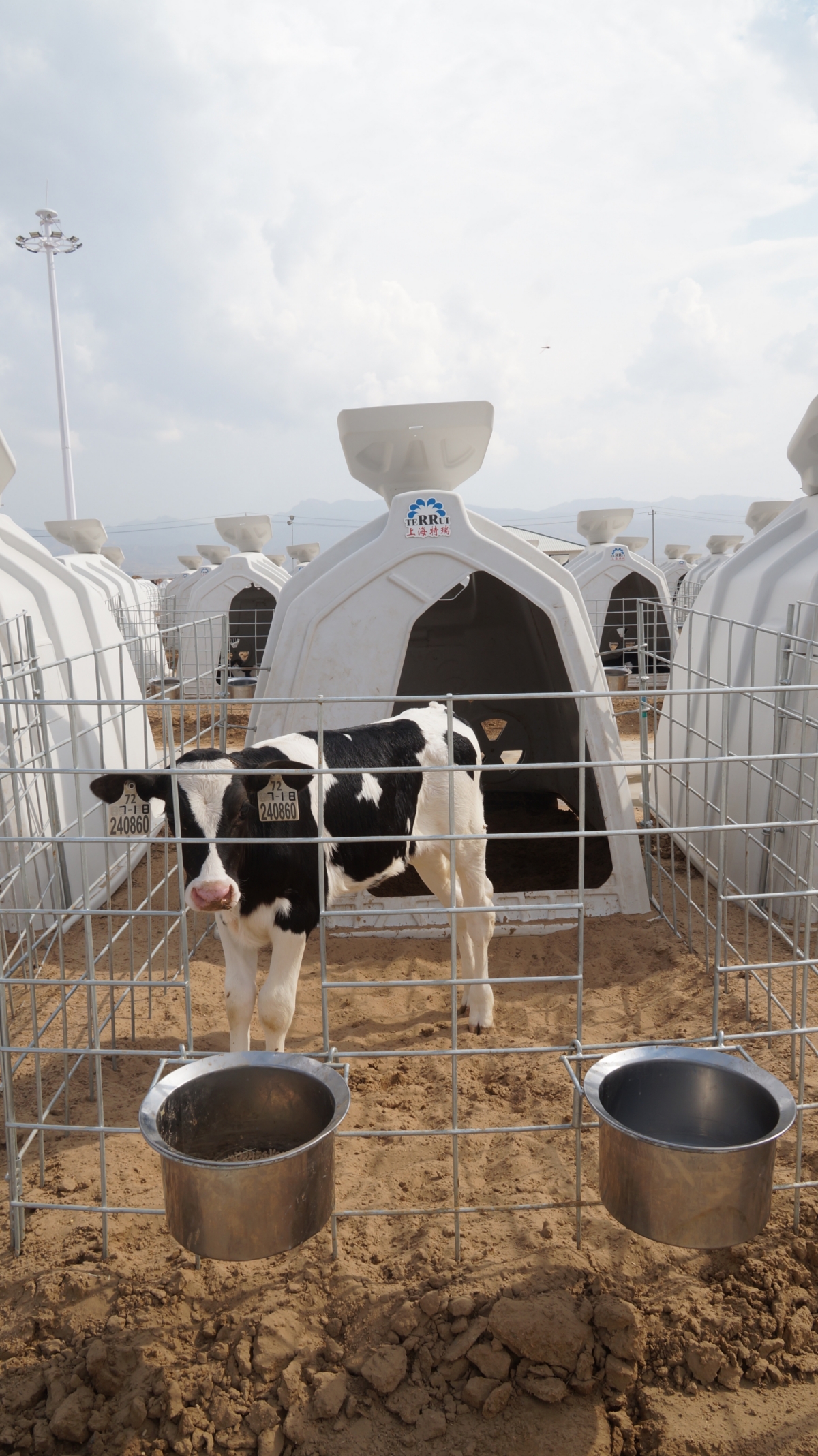
Seasonal Microclimate Management and Rapid Sanitation Protocols
To ensure the multi-vent hull continuously intercepts pathogen transmission cycles, facility ground crews should follow standardized technical adjustments across seasonal batch rotations:
4.1 High-Volume Summer Heat-Stress Mitigation
During hot summer periods with high solar radiation loads, ground crews should open the rear and side ventilation discs to their maximum capacities. Working together with the broad front entry zone—which provides high layout flexibility with a door cut that can be chosen on the left, right, or center (Door can be cut left, right or middle)—the unit establishes clear, high-volume horizontal cross-ventilation. This layout, combined with the reflective properties of the light-colored shell, keeps internal temperatures close to ambient shade levels, mitigating severe heat stress.
4.2 Cold-Season Balancing and Low-Labor Bio-Sanitation
During freezing winter blizzards, operators should close the rear discs down to 1/4 or 1/3 of their open areas, maintaining only the minimum air exchange required to extract rising ammonia. Even with its heavy 36.5KGS protective hull structure, the easy installation and labor-saving design allow a single operator to quickly decouple the front fencing and tilt the shell over for sanitizing. Operators can also use the customized wheel options for easy moving to relocate the unit to dedicated wash zones. The smooth, non-porous interior allows a standard 150+ bar wash spray to clear out used organic materials quickly, allowing for rapid UV-drying periods to clear out lingering respiratory pathogenetic traces before the next batch enters.
FAQ
Q1: Why are the rear multi-hole ventilation discs placed in an elevated position instead of near the bottom floor?
Answer: Lower vent positions allow freezing ambient air currents to sweep straight across the bedding layer where a calf rests. Direct low-level cold drafts cause rapid peripheral vasoconstriction and suppress local immune defenses, making the calf vulnerable to acute respiratory pathogenetic attacks. Terrui places the air discs in the upper hull segments, forcing incoming air to slowly sink and mix with upper internal air, which clears out bottom-level ammonia while protecting the calf's thermal comfort zone.
Q2: What is the fluid-dynamic relationship between the 2.88m² interior area and microclimate air exchange?
Answer: Small internal spaces (less than 2㎡) quickly fill up with moisture from waste and high levels of exhaled carbon dioxide, creating stale air volumes that vents cannot dilute fast enough without creating high-velocity drafts. The 220 cm long and 145 cm wide footprint provides a reliable 2.88㎡ internal buffer volume. Working with the upper stack effect, it allows air to circulate smoothly and naturally, minimizing the micro-bacterial density linked to BRD transmission.
Q3: How does a roto-molded polyethylene calf hutch outperform traditional wooden or galvanized metal enclosures in biosecurity ventilation?
Answer: Galvanized iron sheds easily produce internal condensation dripping during cold seasons, keeping humidity dangerously high, while wooden panels contain tiny structural seams where bacteria escape routine washing. The seamless roto-molded polyethylene shell features zero joint lines and excellent chemical resistance along its non-porous surface. Wash-water drains out completely without soaking into the walls, and the high-airflow discs dry the interior quickly to maintain excellent calf housing biosecurity.
Q4: How does the heavy 8mm hot-dip galvanized steel rod yard support the overall ventilation of the pen module?
Answer: The external yard fence uses a wide-grid ø8mm steel core that allows natural ambient micro-currents to move freely, unlike solid panel runs. This combination of a draft-free internal shelter with an open-air feeding grid ensures high air renewal across the eating and drinking spots without disrupting the protected microclimate inside the 36.5KGS heavy chassis.
Conclusion
In conclusion, the Terrui 1500 WIDE heavy-duty polyethylene calf hutch platform masterfully balances winter heat retention with effective ammonia extraction through its multi-vent air discs, seamless roto-molded shell, and deep buffer interior area. For professional, modern dairy operations, it represents a high-return asset to strengthen calf housing biosecurity protocols, minimize early-stage respiratory disease rates, and reduce routine operational treatment costs.


 English
  中文
中文  日本語
日本語  français
  Deutsch
  Español
  русский
  português
  العربية