Summary
There is an old saying among dairy vets: you can take the cow to the trough, but if the trough is empty she will not stand there waiting. Water is the most basic input a herd has, and yet it is the one most farms shortchange without realizing it. A cow needs water before she can turn feed into milk, and when the water is hard to reach — or stale, or frozen — intake drops and production follows. Cattle water drinkers fix that quietly. The float valve keeps the level up on its own, so the herd always finds water when it walks over. On farms that make the switch, the production lift is usually in the 5 to 10 percent range, and nobody changed the feed. We have heard that number from enough herd managers over the years to trust it. Terrui builds the whole spread — long blue plastic troughs, stainless panels, compact bowls — so the size can match the herd, not the other way around. The rest of this guide covers how they work, why they pay for themselves, and how to pick the right one.
What Are Cattle Water Drinkers?
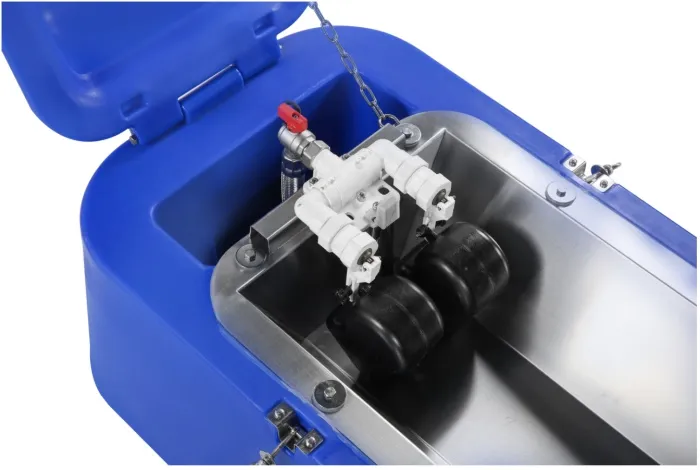
A cattle water drinker is, at heart, a trough that refills itself. Inside sits a float valve, and its only job is to hold the water at the right level. Cows drink, the level falls, the valve opens, water runs in, the level comes back, the valve shuts. No timers, no pumps, nothing to program. It is the same mechanism as the tank in your bathroom, just built out of heavier stuff for barn life.
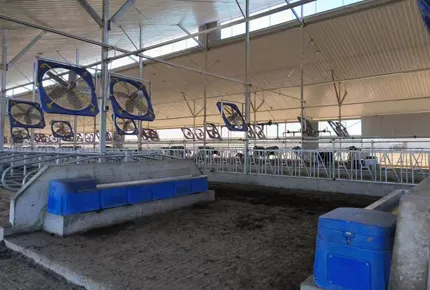
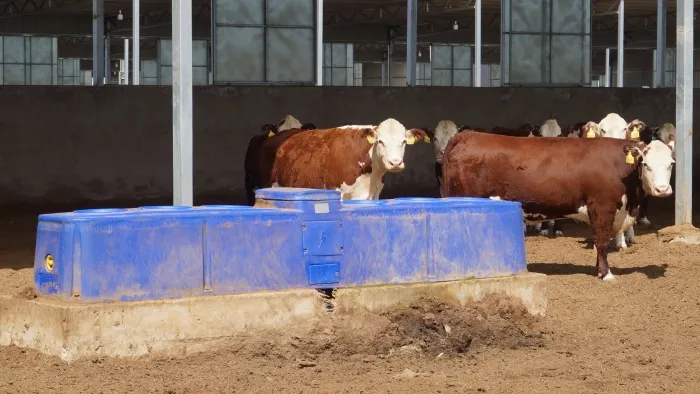
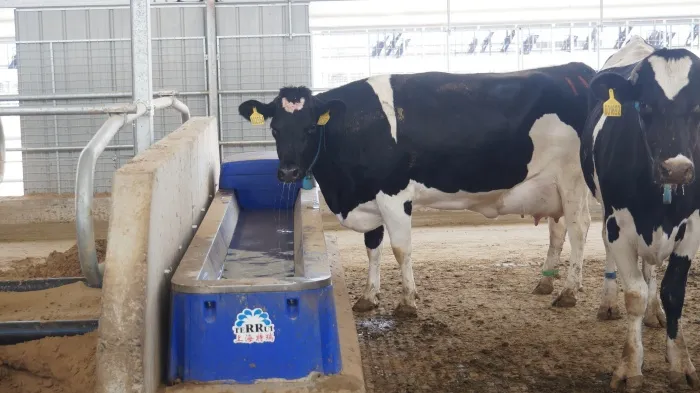
Terrui does not make one size and call it done. The range is sized to the herd instead. The 4m/13.1ft cattle water trough is the workhorse for a full freestall barn; the 2.8m/9.1ft blue plastic cattle water troughs are comfortable for medium groups and outdoor lots; the 1.1m/3.6ft cow water trough suits smaller pens and calving areas. On the stainless side there is the 3.3m/9.9ft heated panel model for cold climates, a single hole cow water trough for tie stalls, and cattle drinking bowls when you only need to water one or two animals at a time. The point is that the drinker fits the group, not the other way around.
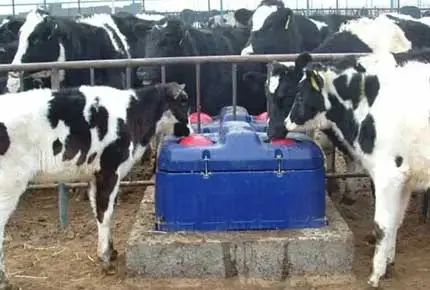
About the blue color: it is not branding. People ask, and it genuinely is not. Blue plastic absorbs less heat than black or dark gray, so on a hot afternoon the water stays noticeably cooler. Blue stands out against grass and concrete, so the cows find the water point easily and bump into it less. The material is UV-resistant, which matters for anything parked in the sun all summer. And dirt, algae, and slime show up clearly against blue, which means you notice the problem and clean it before it gets out of hand.
One more point about the float valve that buyers sometimes miss: it is a sealed unit in the Terrui design, which means fewer moving parts exposed to manure and bedding. That matters because the float is the one component that actually does work, and a sealed mechanism is far less likely to jam halfway through summer. When it does eventually need attention, the valve assembly is accessible through the same side panels used for cleaning, so the whole job takes minutes rather than a service call.
Why Choose Cattle Water Drinkers?
The first reason is the milk. Water and milk output move together, and the simplest way to lift intake is to keep water in front of the cows all day. On farms that move from filling a tank once a day to a true automatic system, the jump in production is usually in the 5 to 10 percent range — and the biggest gains show up on operations that were quietly under-watering before. No feed change is involved. The gain comes from hydration alone, which makes it the cheapest production increase most dairies will ever see.
Then there is the waste. An open trough loses water to overflow, spillage, and evaporation, and every liter that ends up on the floor becomes runoff that has to be handled. A float-valve drinker only refills what the animals actually drink. On a large dairy that shows up on the water bill in the first season, and in winter it means less ice to break and less frozen ground around the water point.
Labor is the third reason, and it is the one staff notice first. Somebody has to haul water, scrub tanks, and chip ice when you are on manual systems. A drinker takes the refill task away completely, and smooth plastic or stainless surfaces rinse out faster than rough concrete. The hours saved every week go back into feeding, health checks, and the jobs that actually move the operation forward.
Water quality improves too, and that is a health story as much as a convenience one. Stagnant water breeds algae and bacteria, and cows drink less of water that tastes stale. The constant refill keeps the water moving and fresh, which supports rumen function and cuts the risk of waterborne disease. In summer, cool moving water is one of the cheapest heat-stress countermeasures a barn can have, because a hydrated cow regulates her body temperature far better than a dehydrated one. That single effect — cooler water, more intake, better heat tolerance — is why many southern dairies put drinkers in before they put in fans.
Durability matters when you buy for the long haul. The blue plastic troughs are UV-resistant polyethylene that stays rust-free year after year, and the stainless panel models shrug off manure, urine, and the cleaning chemicals used in a working barn. No peeling paint, no weld failures, no rust stains floating in the water.
The same family of drinkers also covers more than cattle. With the right height and size, the units serve horses, sheep, and goats too, which simplifies life for mixed farms and for distributors who stock one livestock waterer line instead of several. Edges are smooth and rounded, and the float valve refills gently, so cattle are not startled by surges — a calm water point means less pushing, less stress, and fewer injuries around the trough.
How to Choose the Right Cattle Water Drinker
Start with the numbers. A lactating cow drinks somewhere between 60 and 100 liters a day, and more when it is hot. Multiply that by your herd size and compare it to what the drinker can hold and refill. The 4m/13.1ft cattle water trough is built for large groups; the 1.1m/3.6ft cow water trough suits smaller pens. If you are not sure, go a size up — water access is not where you want to cut corners, because a shortfall shows up immediately as less milk.
Watch the refill speed. The float valve has to refill faster than the herd drinks at peak times, or cows stand in line and intake drops. After morning milking, stand by the water point for ten minutes. If there is a queue, you need a faster refill or another unit. The compact cattle drinking bowls are designed for continuous duty, and longer troughs let several cows drink side by side without pushing.
Indoor or outdoor changes the choice. In a shed or barn, the drinker is plumbed straight to the supply line and the float does the rest. Out in a pasture, the material has to stand up to sun and weather — the blue plastic troughs are UV-resistant and built for that; stainless models belong in high-traffic indoor alleys where pressure washing is a daily routine. The single hole cow water trough and the drinking bowls both fit shed and calving-pen duty well.
Climate decides the extras. Where winters freeze, a heated model is not optional. Terrui's 3.3m/9.9ft stainless panel heated cattle water trough keeps water flowing through the cold months, and cattle that cannot drink in winter eat less and lose condition — so the heater protects production as much as it protects the plumbing. In hot climates the blue color and constant refill keep water cooler and fresher, and cows drink more of water that tastes good. Either way, check the water point before the first frost and again before the first heat wave.
Maintenance is a weekly habit, not a project. The rotatable opening cattle water trough gives easy access for cleaning, and the stainless panels wash down quickly. Once a week, check the float valve, confirm the supply line is not pinched, and watch the level during peak drinking. Five minutes of checking prevents a whole morning of hauling water after a stuck valve.
Cattle Water Drinkers FAQ
How does a cattle water drinker work?
It works on a float valve, the same principle as a toilet tank. The valve keeps the water at a set level: when cattle drink and the level drops, the valve opens and refills; when the level is back up, it closes. No timers, no pumps.
What are the benefits of using a cattle drinker?
Less labor, better water availability, and less waste are the obvious ones. But for a dairy the biggest benefit is usually production: water intake limits milk output, so fixing water availability lifts production without changing the ration.
Can cattle drinkers be used in all seasons?
Yes. Heated models like the 3.3m/9.9ft stainless panel trough keep water from freezing in winter, and the blue plastic and stainless units perform well in warm weather. Match the model to the temperatures your region actually sees.
How do I choose the right size for my herd?
Work from daily demand: roughly 60 to 100 liters per lactating cow per day, multiplied by herd size. Then make sure enough drinker length lets at least ten percent of the herd drink at the same time. Re-check the numbers whenever the herd grows.
Do cattle water drinkers really boost milk production?
They do, indirectly but reliably. Milk is mostly water, and a cow cannot turn feed into milk without enough of it. When constant access to clean fresh water raises intake, production follows — typically 5 to 10 percent on farms that were under-watering before.
Can the same drinker serve other livestock?
Yes. Sized and set at the right height, the same units serve horses, sheep, and goats. The single hole cow water trough and the cattle drinking bowls are especially flexible in mixed barns, and the full livestock waterer family covers every species a farm keeps. For a distributor this is a practical advantage: one supplier, one product line, one set of spares.
Is installation something a farm crew can handle?
Usually yes. The float valve and plumbing are straightforward, and the units are designed so a two-person crew can position and connect them in an afternoon. If you are installing several, the second one goes noticeably faster than the first. Most buyers simply need a water line, a level spot, and basic tools.
Conclusion
Water is the cheapest input on a dairy farm and the one most often taken for granted. Cattle water drinkers turn that input into production: fresh water in front of the herd around the clock, less waste, less labor, healthier animals. Whether the main barn needs a 4m trough, the pasture needs a blue plastic unit, or winter demands a heated stainless model, the Terrui cattle drinker range has a size for the job. Send us your herd numbers and we will help size the system — every week without reliable water is a week of milk left on the table. Start with one pen, measure the change in intake and production over a few weeks, and let the results sell the rest of the barn on the upgrade. That is how most of our customers convince the skeptics on their own crew — with their own numbers, not with ours.


 English
  中文
中文  日本語
日本語  français
  Deutsch
  Español
  русский
  português
  العربية