Summary
Every farmer knows the cycle: buy a trough, watch it rust, patch it, replace it, start over. Galvanized tanks die from the inside where you cannot see, and plastic ones crack after a few hard winters. A stainless steel cattle water trough breaks that loop because the surface simply does not corrode — no rust flakes in the water, no weld failures, no second purchase a few years down the road. The Terrui heated 3.3m/9.9ft model is the one we keep coming back to: 200 liters of capacity, a 120-liter-per-minute refill, and a heating element tucked under a stainless liner inside a double-layer polyethylene shell. People in the industry throw around the phrase "15-year trough" loosely, but this construction is what actually earns it. Read on for what to look at before you spend the money, whether you run the barn yourself or supply the people who do.
What Is a Stainless Steel Cattle Water Trough?
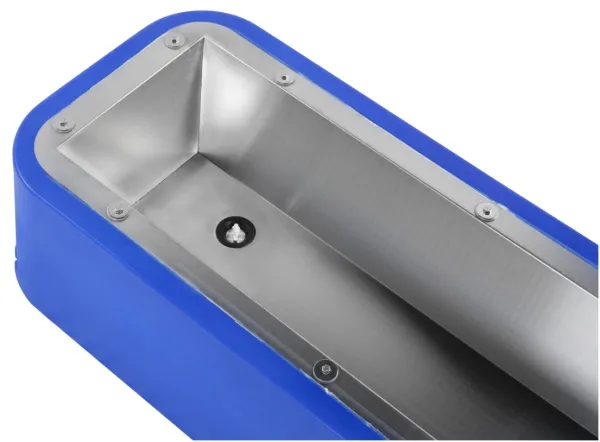
The name tells you most of it: a watering trough where cattle drink from stainless steel panels instead of plastic or galvanized metal. That sounds simple until you think about what the surface endures. It touches the water, the cows' mouths, the pressure washer, the manure splatter — every day, all year. Steel that resists all of that is not a luxury, it is the difference between a trough you clean and a trough you fight. Anyone who has scraped rust scale off a galvanized tank on a January morning knows the feeling.
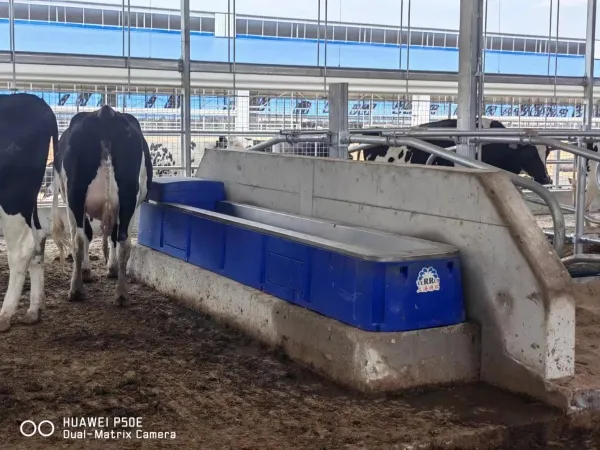
The Terrui 3.3m/9.9ft model (part number TPT33026SSD) is the one we usually point people to. It runs 330cm long, 67cm wide, and 53cm tall, with the drinking rim at 35cm. The basin takes 200 liters, and the valve refills at 120 liters per minute, so a pen of cows coming back from milking cannot empty it faster than it fills. Hookup is a 1-inch braided hose, one unit per crate.
The interesting part is underneath. Terrui did not bolt the heater to the outside, and they did not hang it in the water the way old stock tank heaters do. It is seated below the stainless liner, enclosed in a polyethylene shell that is actually built as two layers. Cows drink off the clean stainless top; the element stays dry and protected below, out of reach of moisture, manure splash, and rodents. Their spec sheet says the unit resists deterioration, erosion, and degradation — corporate talk for "we built it so you do not buy another one." It is CE certified for plastic water trough construction, and the detailed figures are in the Terrui Cattle Waterer PDF.
That double-layer setup is worth stopping on, because it is not something you see on most drinkers. On a normal heated tank the element sits where the barn can reach it — which also means moisture and mice can reach it. Here the element is wedged between the liner the cows drink from and the protective shell outside. Heat comes up through the liner into the water, like the element under a kettle, and the electrics never see the barn environment. It is a small design decision that shows up as years of trouble-free winters.
Why Choose a Stainless Steel Cattle Water Trough?
Start with the lifetime, because that is the real reason people pay for stainless. A stainless steel cattle water trough outlasts galvanized tanks by a wide margin and plastic troughs by an even wider one. Galvanized steel rusts where the coating gets scratched — and on a cattle drinker, the coating always gets scratched. Stainless does not have that failure mode at all. When a trough is going to sit in the same pen for ten or fifteen years, that difference is not a detail; it is the whole story. The "15-year" figure in the title is not something we invented to sound good. It is what operators report back after the first few winters, because the unit simply never reaches the failure point that kills cheaper troughs.
Then there is the corrosion that a cattle barn throws at metal every day. Manure, urine, and the ammonia those produce eat through ordinary steel, and the chemicals you pressure-wash with make it worse. Stainless shrugs all of it off. No rust stains to scrub, no thin spots that turn into leaks, no metal flakes ending up in the drinking water. What the cows drink from stays clean for as long as you own the unit — and clean water is a herd-health factor that shows up in the vet bill long before it shows up on any spec sheet.
Winter is where the double-layer design earns its keep. The heating element under the stainless liner keeps the water liquid through the cold months, so cattle keep drinking when they need it most. Because the element is wrapped in that protective polyethylene shell, it is safe from moisture, rodents, and the general roughhousing of barn life. Terrui even points out that the design keeps rats and bugs out of the waterers. That sounds minor until you think about what a mouse in the water supply means for the herd — pests in a drinking source are a health incident waiting to happen.
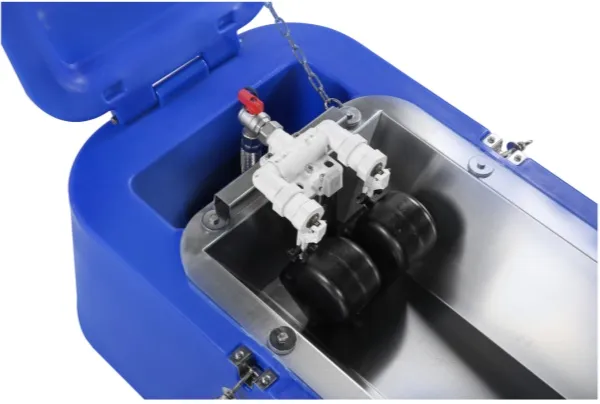
Day-to-day use is where people notice the difference most. The trough does not waste water, it is easy to set up and move, and the inlet head sits where you can actually see the water coming in. Cleaning is quick because the interior is one smooth stainless surface with nowhere for grime to grab. And the drinking height is set so cattle drink the way they naturally would, which means they drink more — and intake is production. If you are comparing stainless against a cheaper blue plastic cattle water trough, do not compare price tags. Compare cost per year over a decade, and the picture changes fast.
How to Choose and Install a Stainless Steel Cattle Water Trough
Deciding on stainless is the easy half — nobody needs convincing that steel which does not rust beats steel that does. The real questions start when you size the unit and figure out where it goes. Walk through these in order and you will not be redoing plumbing or dragging a heavy trough around twice.
Size it against the herd, not the pen. A 200-liter trough like the TPT33026SSD is right for a mid-sized group, and the 120L/min refill keeps up when several cows drink at once. Bigger group? Step up to the 4m/13.1ft opening stainless panel cattle water trough in the same family, or set two troughs at separate points so the boss cows cannot guard the water. And remember a lactating cow can go through 60 to 100 liters a day — size against real demand, not head count.
Ask yourself honestly whether you need heat. If your winters never see real frost, a plain trough does the job. If they do, a heated stainless steel cattle water trough stops being optional. It is the difference between cattle drinking all winter and cattle going without, because the element under the liner keeps the water drinkable in sub-zero weather. Cattle that cannot drink in winter eat less and lose condition — the heater pays for itself in the first hard January.
Plan the water line before anything is set in concrete. The trough connects through a 1-inch braided hose, and the inlet head is visible so you can watch the supply. Give it a dedicated line with a shutoff valve so you can isolate the trough for cleaning or winter service. Make sure pressure can feed the 120L/min flow, or the trough refills slower than the herd empties it. In freezing country, bury or insulate the line — the heater protects the trough, not an exposed pipe between the valve and the barn wall.
Give it a base that will not move. Two hundred liters of water is heavy. Put the trough on a level, load-bearing base — concrete pad or compacted hardcore — so it cannot settle unevenly and strain the fitting. Getting the base right the first time is the difference between a clean install and a cracked connection in the mud two years later.
Keep the washer in reach. The smooth stainless interior is the whole point: it rinses down in minutes and does not hold biofilm the way rough concrete does. Place the trough where the pressure washer can reach it, and fold cleaning into the weekly routine instead of an annual event. The visible inlet head also means you spot a supply problem before it becomes a dirty-water problem.
Stainless Steel Cattle Water Trough FAQ
How long does a stainless steel cattle water trough last?
With basic care, 15 years or more is realistic. Stainless simply does not corrode the way galvanized does, and the double-layer shell protects the heating element on top of that. Most farms will replace a plastic trough two or three times in the life of one stainless unit. Measure it as cost per year and the answer stops being close.
Is stainless steel worth the higher price?
Run the numbers over the service life and it usually is. You pay more up front, but the trough lasts two or three times longer and you never pay for the labor of replacing and re-plumbing a rusted or cracked one. There is also the downtime nobody prices in: when a trough dies mid-winter, it is not just a replacement cost — it is a full day of scrambling to keep the herd watered.
Will the water freeze in winter?
Not on the heated model. The element under the stainless liner, inside the polyethylene shell, keeps the water liquid even in sub-zero weather. The double-layer construction holds the heat where it belongs, so the element is not fighting the cold air all night.
Can it be used indoors and outdoors?
Both. The stainless interior handles pressure washing and barn chemicals, and the polyethylene shell stands up to weather. A lot of farms run the heated model indoors through winter and rely on the corrosion resistance outdoors in summer. Full sun is no problem either — UV is what kills cheap plastic, and this is not cheap plastic.
How much water does it hold?
The TPT33026SSD holds 200 liters, about 52 gallons, and refills at 120 liters per minute. That fits a mid-sized group. For larger herds, step up to the 4m stainless panel trough or add a second water point. A working rule: allow for about ten percent of the herd drinking at once, and recheck whenever the herd grows.
Does it come with a hose connection?
Yes — a 1-inch braided hose connection. The inlet head is visible so you can check the supply easily, and the hookup is designed to stay leak-free. That visible inlet saves real time when you are tracing a supply problem.
Conclusion
Every barn fights the same war against rust, cracks, and premature replacement. A stainless steel cattle water trough ends that war because the material simply does not quit. Terrui's heated 3.3m stainless panel model puts the corrosion resistance of stainless, the winter protection of an under-liner heating element, and the durability of a double-layer polyethylene shell into one CE-certified package. The numbers are straightforward: 200 liters of capacity, 120 liters per minute of refill, and a service life counted in decades instead of seasons. Compare that against buying and installing a cheaper trough every few years and the decision makes itself. Get a quote on the stainless steel cattle water trough, look at the 4m opening stainless panel model, or ask about the wider cattle drinker range — the Terrui team can walk you through sizing for your herd.


 English
  中文
中文  日本語
日本語  français
  Deutsch
  Español
  русский
  português
  العربية