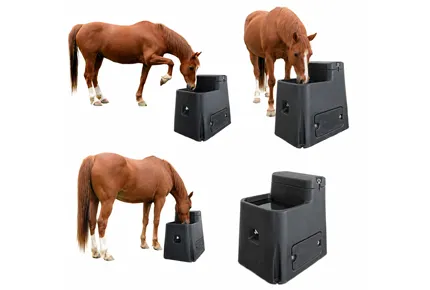
Summary
The water trough is the primary casualty of high-salinity groundwater in modern dairy and beef operations. In geographic belts where deep well water is saturated with calcium and magnesium, standard NBR or EPDM rubber seals are a massive liability; they calcify, harden, and experience "micro-tearing" within months. This material decay triggers chronic "weeping leaks" that saturate barn bedding and spike Somatic Cell Count (SCC) risks by creating bacterial nurseries around the tank. Terrui has addressed this micro-mechanical failure by integrating industrial-grade fluororubber (FKM) composite seals into its temperature-controlled blue water trough line. By leveraging the extreme stability of the carbon-fluorine (C-F) molecular bond, Terrui's FKM gaskets remain chemically inert in hypersaline environments. This report analyzes how fluororubber molecular chain stability prevents mineral-crust tearing and secures long-term ROI by eliminating the hidden labor costs of repetitive valve maintenance within the water trough assembly.
What: Anatomy of a Fluororubber Fluidic Axis in the Water Trough
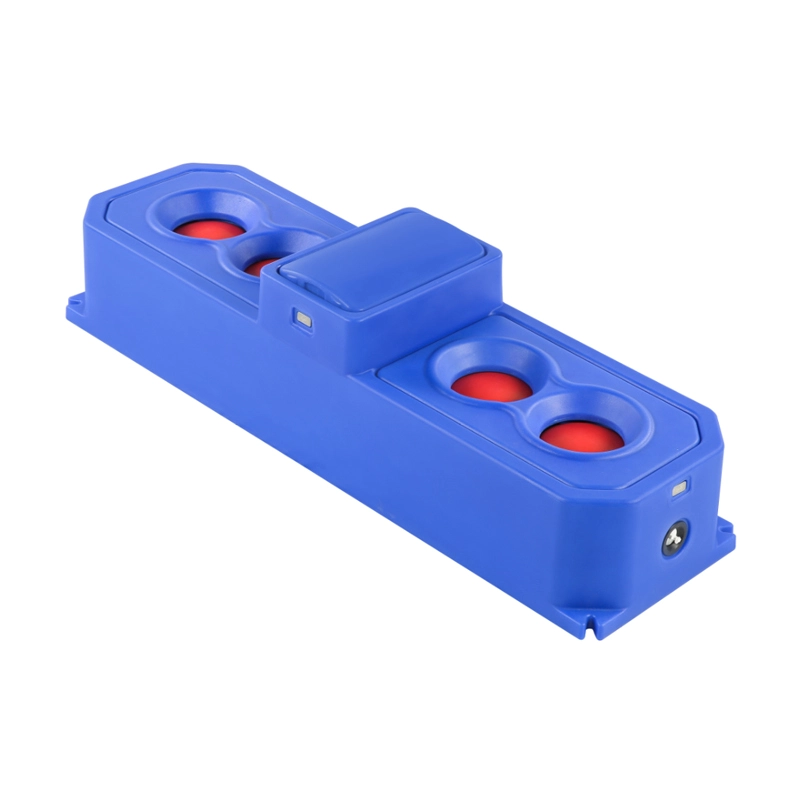
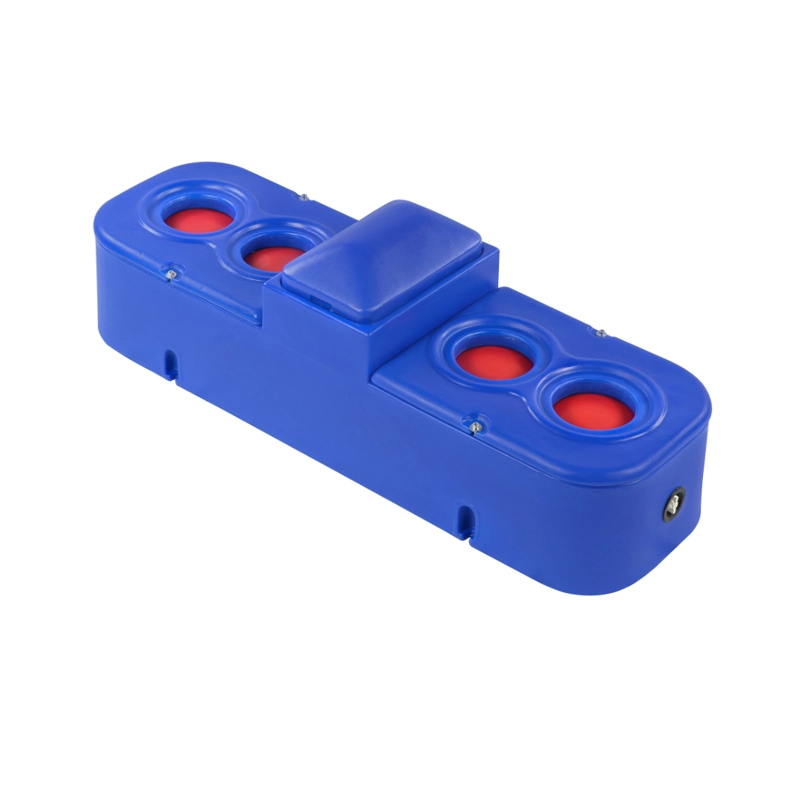
Defining a professional water trough requires moving past the "commodity hardware" mindset. This is a high-load, all-weather terminal. The core fluidic axis of the Terrui blue series integrates a high-capacity float valve where the critical liquid-shutoff seat is equipped with a custom-engineered Fluororubber (FKM) gasket. From a material science perspective, FKM is a saturated copolymer with highly electronegative fluorine atoms shielded around a carbon backbone.
This creates the C-F bond—the strongest in organic chemistry (485kJ/mol). Unlike the hydrocarbon chains in cheap rubber found in a standard water trough, these bonds don't snap when exposed to the 0.1–0.6 MPa pressure matrix found in commercial barn plumbing. The seal is essentially a chemical fortress, remaining elastic in hyper-saline well water dense with magnesium sulfates and calcium carbonates. This isn't just a gasket; it's a thermodynamic barrier. Because the FKM is fully encapsulated within a shock-resistant housing inside the water trough, it operates in complete harmony with the active thermostat matrix, representing a foundational, material-grade breakthrough for challenging geographic water conditions.
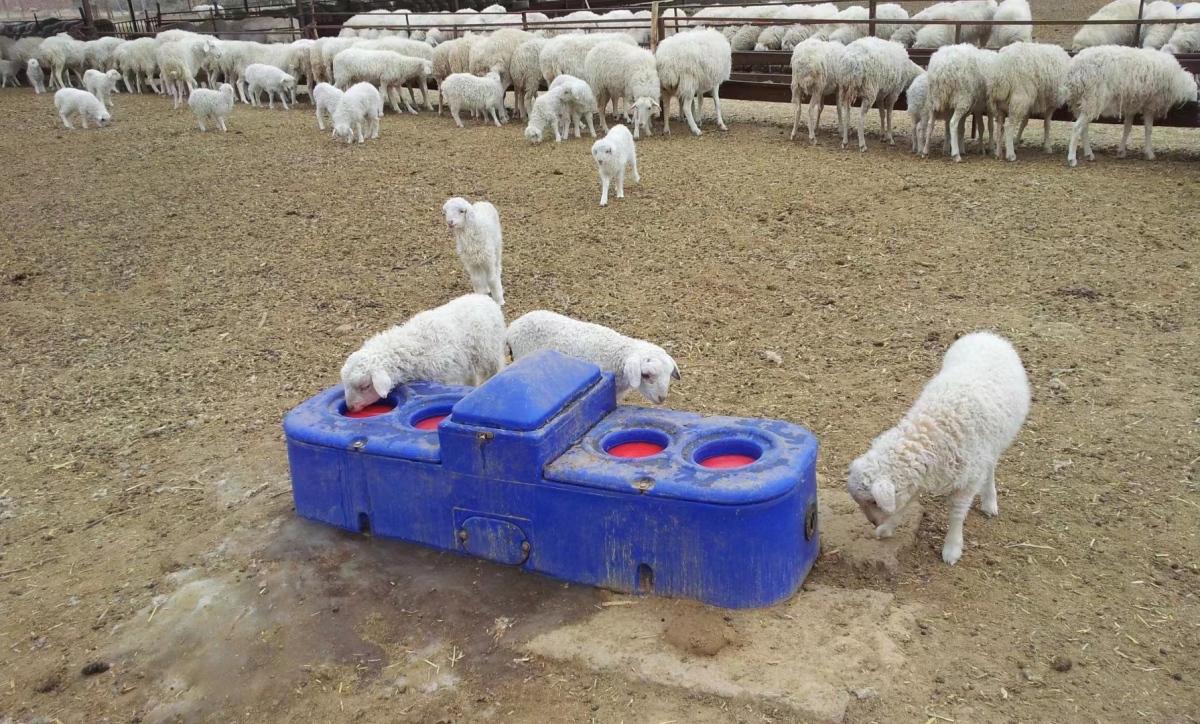
Why: Failure Analysis of Conventional Elastomers in the Water Trough
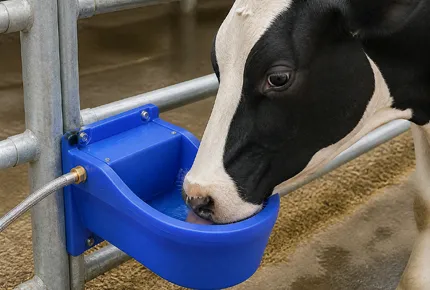
Why are top-tier ranches ditching standard rubber for their water trough fleets? Because "commodity" elastomers like EPDM are built for municipal city water, not the high-salinity reality of a deep-well ranch. Conventional equipment fails due to four primary mechanical liabilities that Terrui has systematically deleted.
1. Defeating Hard-Water "Mineral Crushing" and Seepage: Standard rubber valve seats are porous. In a saline water trough environment, calcium crystals embed themselves into the rubber's microstructure. When the valve closes, these rigid crystals act like sandpaper, piercing and tearing the rubber's microstructure from the inside out. Terrui's fluororubber has ultra-low surface energy—mineral scale literally cannot bond to it. The gasket features high rebound elasticity, permanently neutralizing the "mineral crust" that causes chronic weeping in the water trough.
2. Immunity to "Chemical Rot" from Modern Sanitizers: Dairy biosecurity requires aggressive oxidizers—sodium hypochlorite, chlorine dioxide, and peracetic acid. These chemicals turn standard water trough rubber into a sticky, swollen, or chalking mess. Fluororubber's highly fluorinated chain is essentially immune to these oxidizing agents. You can flush your water trough lines with concentrated disinfectants without melting your valve seats. It's about material-grade immunity.
3. Stopping the "Heat-Aging" Death Spiral in Thermal Troughs: This water trough incorporates an active heating matrix. Heat is the ultimate catalyst for rubber degradation. Standard elastomers go brittle in warm, saline water. FKM exhibits elite resistance to hot-liquid aging, maintaining its static hardness levels even during 24/7 winter heating cycles inside the water trough. You stop paying for "preventative" valve swaps and start trusting your hardware.
4. Eradicating Compression Set and Overflow: When a seal loses its "rebound," the valve lags. In a high-traffic water trough, this causes transient overflows that turn a dry barn into a swamp. Fluororubber's peerless resistance to permanent compression set ensures it pops back to its original geometry after every one of the 5,000+ daily drinking cycles. No lag, no leak, no wasted water in your water trough.
How: Executing Carbon-Fluorine Bond Shielding in the Water Trough
To maximize the ROI of your water trough station, the FKM seal must be managed through a tactical combination of molecular shielding and pressure matching.
Phase 1: Carbon-Fluorine Micro-Chemical Armor
As the valve plunger engages inside the water trough, it's not just a mechanical squeeze; it's a chemical standoff. High-salinity groundwater contains aggressive ions that attempt to sever polymer chains. Terrui's FKM compound uses the high bond energy of the C-F link to block this "chain scission." Incoming chemical agents can't supply the energy needed to break the bond. This ensures that while fighting hard, alkaline water, the water trough seal's micro-geometry remains unchanged after 500,000 cycles.
Phase 2: Viscoelastic Pressure Matching and Self-Flushing
Plumbing pressures in a large barn are erratic. When a booster pump kicks in, the line pressure to the water trough jumps from 0.1 to 0.6 MPa. Terrui uses the superior viscoelasticity of fluororubber to actively deform and match the micro-texture of the stainless steel valve seat. This establishes an absolute fluidic barrier. Even if a micron-sized piece of silt gets trapped, the elastic FKM substrate envelops the particle and flushes it out during the next cycle of the water trough, preventing permanent tracking scores on the rubber surface.
Phase 3: Thermodynamic Synergy with Smart Heating
The blue water trough uses fluid convection to move heat from the base to the valve area. In a standard setup, this localized heat would typically accelerate the softening of the rubber, causing it to "extrude" into the valve orifice. Terrui embeds the FKM gasket within a high-rigidity engineering polymer valve housing, enabling it to leverage the anti-freezing warm water line while insulating it completely from the heat-induced chemical aging that kills lower-grade materials in a typical water trough.
FAQ: Engineering Inquiries for Water Trough Valve Resilience
1. Will the fluororubber gasket get brittle and crack in a -30°C winter?
No. The water trough has a built-in thermostat. The valve is always bathed in warm water. FKM is structurally insulated within this active thermal boundary, completely avoiding the sub-zero cold-brittleness that causes cracking in an unheated water trough.
2. What happens if our water supply to the water trough is full of sand and grit?
FKM has high structural tear resistance, but large pebbles can damage any mechanical seat. If your water source is essentially a sand-slurry, you need a standard pre-filter. FKM is a chemical solution for salinity in the water trough, not a rock-crusher for coarse debris.
3. Is swapping these "high-spec" seals a nightmare for my maintenance crew?
It's a 2-minute job. The Terrui water trough uses a quick-access, heavy-duty cowl. You don't even need to disconnect the main line. Unlatch the housing, swap the modular valve cartridge, and you're done. No digging for tiny O-rings in the mud around your water trough.
4. Can I use aggressive acid descalers to clean out the water trough lines?
Yes. Fluororubber is built for the chemical industry. It laughs at concentrated citric, phosphoric, or sulfamic acid flushes used to clear calcium from dairy plumbing. You can clear your water trough pipes without worrying about melting your gaskets.
5. Does this blue unit require a massive booster pump to get a seal?
No. It features a pressure-balanced design. The "soft" rebound of FKM allows it to achieve a hermetic, zero-drip seal at low gravity pressure (0.1 MPa) just as easily as it does under high-power 0.6 MPa pump networks feeding the water trough.
6. How does a rubber seal actually lower my milk's Somatic Cell Count (SCC)?
Simple logic: No leaks = Dry bedding. Dry bedding = Fewer environmental mastitis pathogens. If your water trough weeps, you're growing E. coli in the mud around the tank. By using FKM to stop the leaks, you're protecting the udder environment and your raw milk premiums.
Conclusion: The ROI of Material Science in the Water Trough
In modern intensive livestock farming, reliability is dictated by the choice of its smallest core materials. Moving past surface-level high-flow rhetoric, the Terrui temperature-controlled blue water trough directly resolves the liability of hard groundwater corrosion via its factory deployment of carbon-fluorine bonded seals. This advanced materials approach coordinates flawlessly with the active electronic heating matrix, permanently killing the bedding contamination and water loss caused by "weeping" legacy valves. Upgrading to a premium Terrui water trough station means integrating hard-core materials science into your facility, establishing an unbreachable defense line for ranch biosecurity and operational cost control.


 English
  中文
中文  日本語
日本語  français
  Deutsch
  Español
  русский
  português
  العربية