Summary
A cow drinking bowl delivers clean, fresh water on demand while cutting water waste by up to 40% compared with open troughs. The automatic float valve refills only what the herd drinks, so there is no overflow, no spillage, and no daily hauling. Terrui cattle drinking bowls are made from heavy-duty, impact-resistant polyethylene through a one-time rotomolding process, and they come in two sizes to match different herd setups. This guide explains what makes these automatic cow drinking bowls work, why they save water and labor, how to install and maintain them, and which size fits your operation — so you can keep every cow hydrated without wasting a drop.
Water intake drives milk production, rumen health, and cow comfort, yet it is the input most farms manage the least carefully. An open trough looks simple, but it is inefficient: water evaporates, splashes, and gets soiled, and cows push for access at peak times. The cow drinking bowl answers those problems at the point of use — one animal, one controlled refill, one clean surface. Whether you run a 50-cow dairy or a small beef herd, the same principle applies: give every animal clean water on demand, and the herd pays you back in production and health.
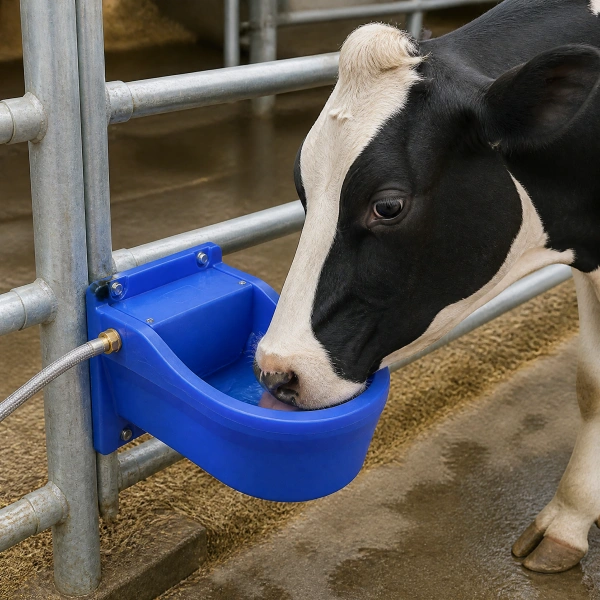
What Is a Cow Drinking Bowl?
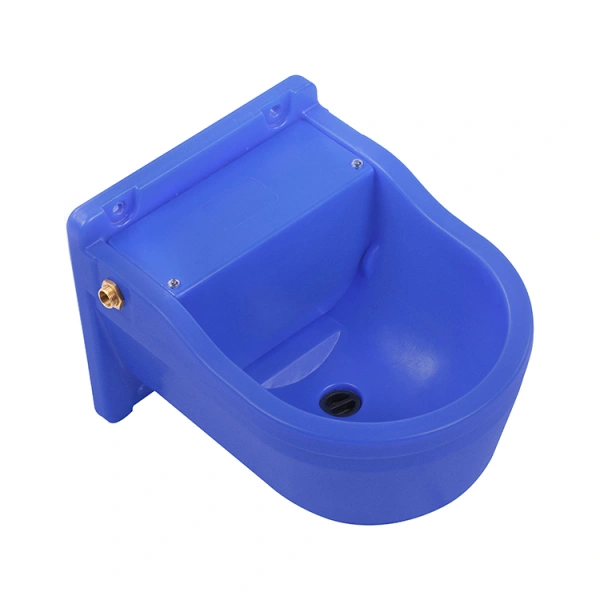
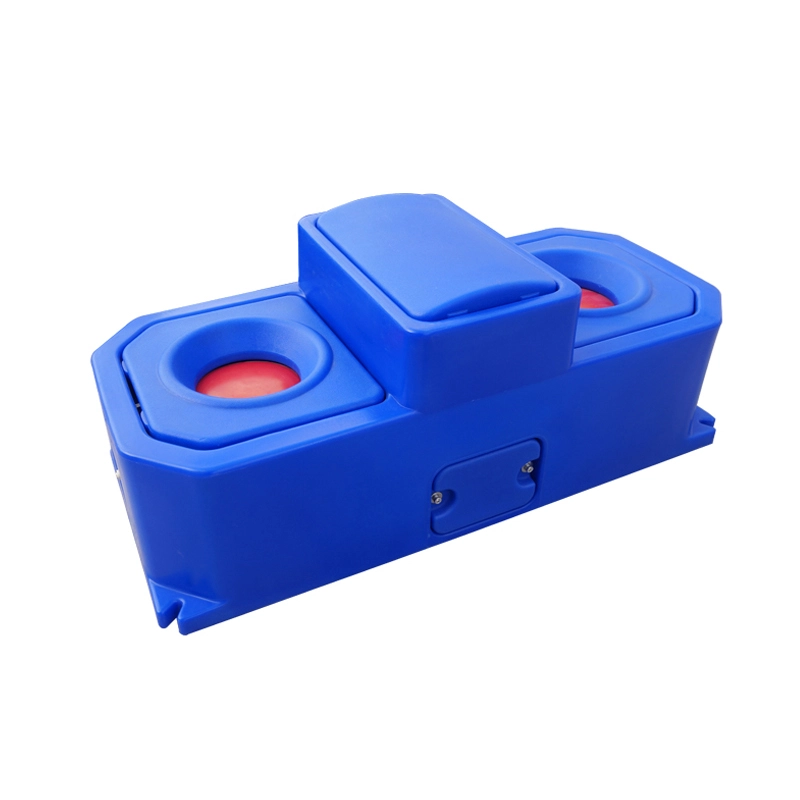
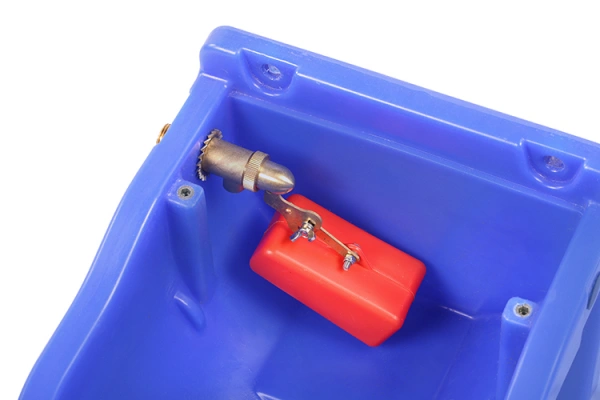
A cow drinking bowl is a compact, wall- or floor-mounted watering unit that gives one or two animals access to a small, constantly refreshed pool of water. Unlike a cattle water trough, which holds a large open volume, a drinking bowl meters water through a sealed float valve: when the cow drinks and the level drops, the valve opens, water flows in, and the level restores itself automatically. That is the engineering core of the automatic cow drinking bowl — clean water on demand, with nothing left standing to collect dust, algae, or debris.
The Terrui cattle drinking bowls come in two models. The TRW405DBLL measures 40cm in length, 29.7cm in width, and 28cm in overall height, with a capacity of 9.3 liters and a flow rate of 6 liters per minute; it ships with a 2.7m braided hose, 2 pieces per carton. The smaller TRW305DBLM measures 30cm by 22.5cm by 23.5cm, holds 4 liters, delivers the same 6 liters per minute, and ships with a 1.5m braided hose, 4 pieces per carton. Both models carry a drinking height suited to cattle, so cows drink naturally without crouching or straining.
The material story matters as much as the dimensions. Each bowl is produced through a one-time rotomolding process using heavy-duty, impact-resistant polyethylene. Rotomolding creates a seamless, single-piece shell with no weld lines or weak seams — the result is strong fall resistance, high strength, and a longer service life in rough barn conditions. The surface is smooth and easy to clean, which keeps the water hygienic over long periods.
What sets these bowls apart from simple troughs is the sealed, automatically controlled high-flow float valve. It provides fresh water consistently while conserving water, reducing sewage discharge, and easing the load on your waste-handling system. The design is also safety-focused: the automatic drinker for cows prevents potential injuries that can occur with exposed plumbing or unstable trough edges.
Why Switch to a Cow Drinking Bowl?
Why replace a working trough? For most operations, the answer comes down to water savings, herd health, and daily labor — three numbers that show up directly on the balance sheet.
1. Cut water waste by up to 40%. Open troughs lose water to evaporation, overflow, splashing, and spillage when several animals push for space. A cow drinking bowl meters water through the float valve, so the only water used is what the cows actually drink. Less water pumped means lower water bills, and less standing water means less evaporation in summer heat.
2. Reduce sewage and runoff. Every liter of overflow becomes wastewater that your drainage system must handle. Because the bowl refills only as needed, it produces far less runoff than a constantly overflowing trough. That eases sewage treatment pressure and keeps the barnyard cleaner and drier, which also improves hoof health and reduces flies.
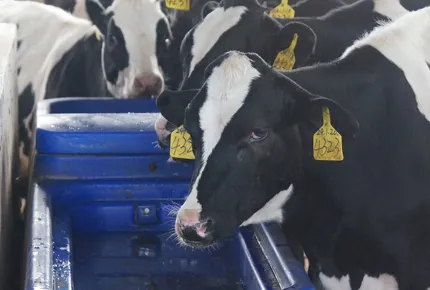
3. Fresher water, healthier herd. Stagnant water breeds bacteria and algae, and cattle will drink less when water tastes stale — reduced intake then drags down milk production and rumen function. The constant refill action keeps the water moving and fresh, encouraging cows to drink more, which supports digestion, milk yield, and overall condition. On hot days, fresh moving water is one of the cheapest heat-stress countermeasures a barn can use, since hydrated cows regulate body temperature far more effectively.
4. Fewer disease pressure points. A water surface shared by an entire group is a transmission route for infectious agents carried in saliva and nasal discharge. The smaller, frequently flushed bowl surface limits contact and dilution keeps contamination levels low. For calving pens and sick-bay stalls especially, controlling the water point is a practical hygiene step that veterinarians routinely recommend alongside bedding and ventilation management.
5. Less labor every day. No more hauling buckets, breaking ice, or scrubbing a large trough. The bowl is easy to install and easy to clean, and the float valve does the refilling work for you. That frees staff time for feeding, health checks, and the jobs that actually move your operation forward.
6. Built for rough barn life. The one-time rotomolding process and impact-resistant polyethylene stand up to head-butting, rubbing, and pressure washing. No rust, no seams to split, and no corrosion from manure or cleaning chemicals — a longer service life than metal bowls in the same environment.
7. Predictable return on investment. Add the numbers up over a season: lower water bills, less sewage handling, fewer labor hours, and healthier cows that drink more and milk better. The bowl is a small capital cost that starts paying back from the first week, and with two sizes available you buy exactly the capacity your pens need instead of oversizing a trough.
These benefits are why water-point control is a growing trend across modern dairy and beef operations. Pairing bowls with a proper livestock waterer plan — the right unit in the right pen — gives you a watering system that matches each group's demand instead of a one-size trough that either overflows or runs dry.
How to Install and Maintain a Cow Drinking Bowl
Putting in an automatic cow drinking bowl is not a big project. Most farms get it done in under an hour per bowl: pick the spot, bolt it down, hook up the water. The steps below are the ones we actually walk customers through, with the maintenance habits that keep the bowl working for years instead of months.
Step 1: Choose the Right Location
Walk your barn first and look at where the cows already gather to drink. A flat, solid spot close to your water line beats a perfect-looking corner that is hard to reach. If you are putting in several cow water drinking bowls, space them out — when cows bunch up at one water point, the timid ones end up waiting and drinking less. That competition is a quiet killer of intake, and spacing the bowls is the cheapest fix there is. Also think about your own reach: you will be kneeling next to this bowl with a brush, so give yourself room to work.
Step 2: Secure the Bowl
Bolt it down properly. Cows lean on bowls, rub against them, and shove each other around them, so a loose unit will rock and eventually stress the water fitting. Whether you mount on the floor or the wall depends on your pen layout; either way, use fixtures that will not bend. The braided hose that ships with the bowl is there for a reason — it makes a flexible link between the bowl and your water line, so the fitting can flex instead of cracking when the bowl gets bumped.
Step 3: Connect the Water Inlet
Turn the water off before you touch anything. Connect your hose or pipe to the inlet valve on the bowl, and make sure it is hand-tight at minimum — we recommend a wrench nip on top of that. Most bowls work with standard water lines, but check the specs against your supply before you buy connectors. When everything is hooked up, open the water slowly and watch each joint. A drip here is easier to fix now than a flooded stall at midnight, so take the extra minute.
Step 4: Daily Check, Weekly Clean
The daily check takes ten seconds: watch one cow drink and confirm the bowl refills and stops at the right level. The weekly clean takes five minutes: brush the bowl, rinse it, wipe any gunk off the float area. Because the rotomolded polyethylene surface is smooth and chemical-resistant, you can disinfect without worrying about the material degrading. Two habits matter most — never let feed dust build up around the float, and never leave the bowl empty in heat, because a dry valve seats worse than a wet one.
Step 5: Seasonal Adjustments
Winter and summer each have their own failure mode. Before the first freeze, insulate exposed supply lines and make sure the valve seat is clean — a valve that closes fully is what keeps ice from creeping up the water line. Come summer, step up cleaning to twice a week and check that the flow keeps pace right after the morning milking, when every cow wants a drink at once. These checks take minutes and they stop the two classic breakdowns: a frozen line in January and an algae-clogged valve in July.
FAQ
1. How much water does a cow need per day?
A lactating cow can drink 60 to 100 liters daily depending on milk yield, diet, and temperature. With a 6 liters-per-minute refill flow, the TRW405DBLL bowl keeps up with repeated visits, ensuring water is always available when the cow comes to drink. Dry cows and young stock drink less, so the smaller 4-liter model covers them well.
2. Will the bowl overflow?
No. The sealed, automatically controlled float valve shuts off flow at the set level. Water is only added as the cow drinks, which is exactly why these bowls reduce overflow and cut water waste compared with open troughs.
3. What sizes are available?
Two models. The TRW405DBLL holds 9.3 liters for larger herds or high-demand pens, and the TRW305DBLM holds 4 liters for smaller groups. Both deliver 6 liters per minute and come with a braided hose for installation.
4. Is it safe for the cattle?
Yes. The design is safety-focused, with no exposed valves or sharp edges that could injure cattle. The bowl mounts flush and stable, and the smooth polyethylene surface has no rust or burrs to cause cuts.
5. How do I clean the bowl?
Weekly cleaning with a brush and clean water is enough for normal use; disinfect as needed with approved sanitizers. The smooth, rotomolded surface rinses quickly, and the float valve area stays accessible for wiping out debris.
6. Can it replace my cattle water trough?
It can supplement or replace troughs at the water point. A cow drinking bowl suits stalls, calving pens, and small groups, while a large cattle water trough still serves bigger open areas. Many farms run both: bowls where control matters, troughs where volume matters. Start with the pens where water access is tightest, measure the change in intake and cleanliness, then expand bowl coverage pen by pen as the results confirm themselves.
Conclusion
Water is the cheapest input on the farm and the one that pays back most when managed well. A cow drinking bowl turns watering from a chore into a controlled system: the float valve meters every liter, the rotomolded polyethylene body shrugs off barn abuse, and the two available sizes fit pens, stalls, and small herds. The result is up to 40% less water waste, cleaner surroundings, fresher water for the herd, and less labor every single day.
Ready to upgrade your water points? Contact Terrui today for a factory-direct quote on cattle drinking bowls, request the full Terrui Cattle Waterer PDF catalog, or ask about pairing bowls with cattle water troughs, the single hole cow water trough, or the automatic drinker for cows range for a complete watering system.


 English
  中文
中文  日本語
日本語  français
  Deutsch
  Español
  русский
  português
  العربية