Create Time: 07 ,17 ,2026
Summary
Managing fast equipment depreciation and premature hardware failure has always been a painful headache on the financial balance sheets of large commercial farms. Especially inside dense dairy housing and swine finishing operations, the air remains choked with heavy moisture, gaseous animal waste, and corrosive chemicals that aggressively break down standard circulation systems. Stopping this costly operational bottleneck requires a specialized, heavy-duty air setup utilizing premium synthetic chassis parts engineered to survive tough agricultural stress. For facility procurement directors and owners looking to stop fast asset decay and cut immediate maintenance bills, choosing gear with high-grade synthetic framing is the fastest way to protect cash flow. By deploying a durable (Livestock Ventilation Fan) network, industrial agricultural facilities can force their indoor climate to stabilize, pull down hardware replacement frequencies, and protect their summer margins from sudden breakdown bills.
What
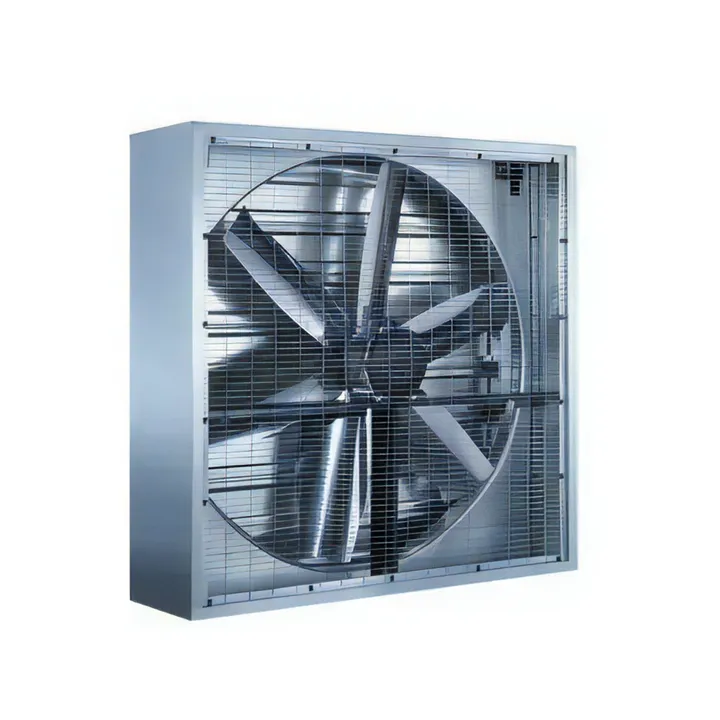
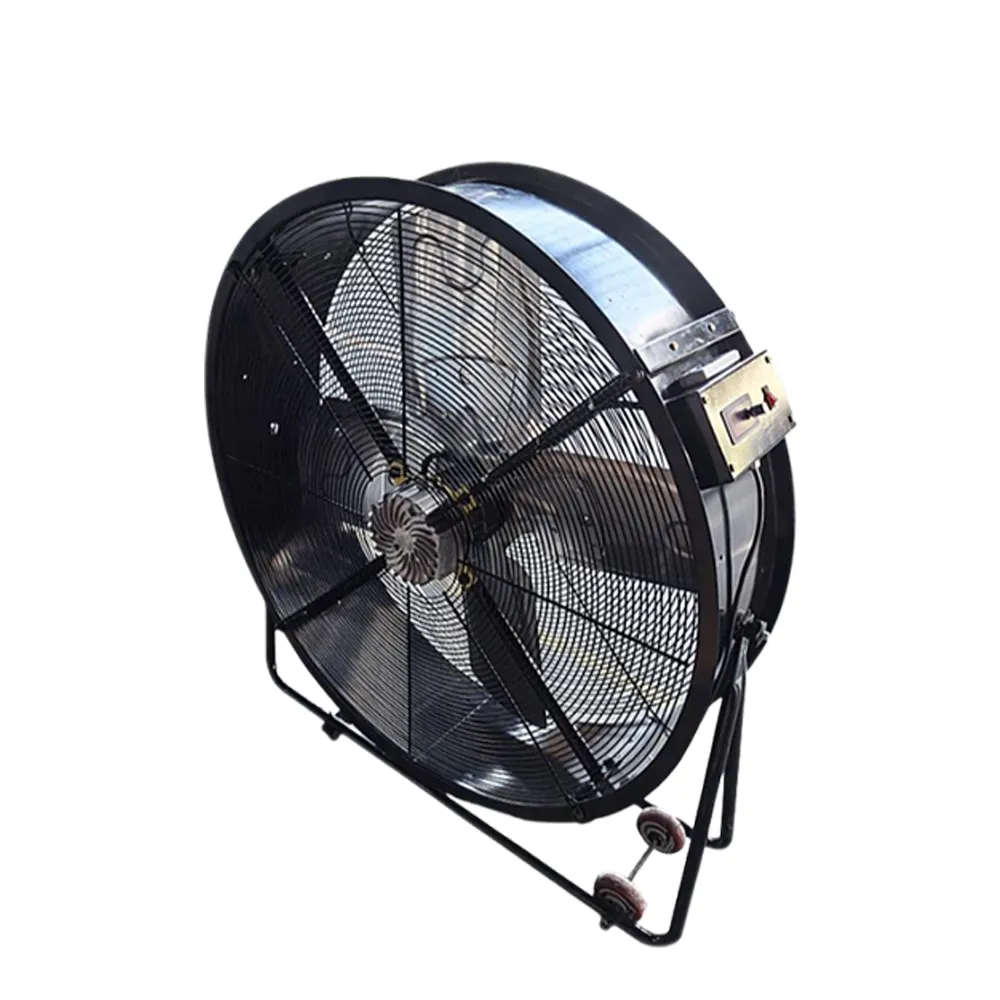
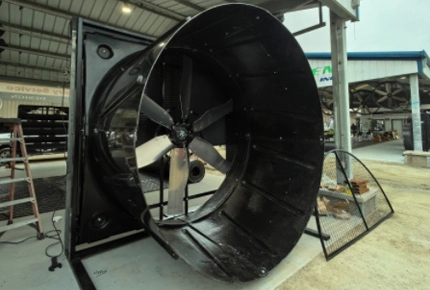
Get a closer look at this 38-inch panel fan, and the first thing you notice is the massive black polyethylene plastic PE outer box box framing, locked at exactly 1122 by 1122 millimeters. This thick synthetic frame shell exists purely to stand up against the wet, acidic ammonia fumes inside animal barns without flaking or blistering. The spinning core carries four 1mm thick 304 stainless steel blades, pressed together in a single factory riveting process to stop physical wobbling entirely. For the drive line, a 300W outer rotor permanent magnet brushless DC motor clamps straight onto the blade hub, eliminating extra hardware and serving as a true heavy-duty (Livestock Ventilation Fan). The complete mechanical kit links right into an Internet of Things APP system for zero-effort automated speed adjustments.
Why
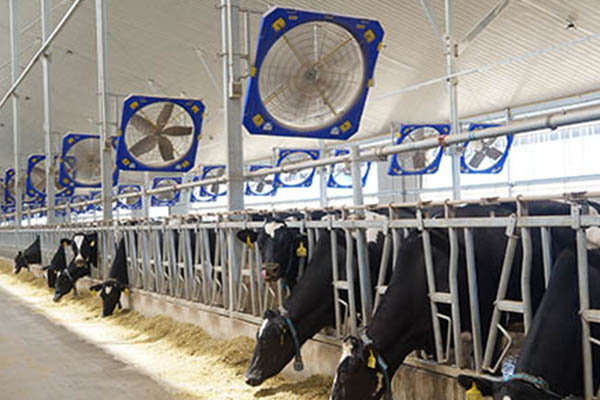
Pulling apart old-style AC asynchronous or inner rotor fan motors shows you exactly how bad engineering actively robs farm profit margins every day. In standard damp animal housing, older steel fan frames suffer from fast rust, surface oxidation, and warping, which forces farm workers to spend time doing dangerous high-altitude replacement tasks. These rusted legacy units also draw too much electricity due to friction drag while failing to make the fast air stream needed to stop animal heat stress across dense pens. Upgrading to an advanced direct-drive Livestock Ventilation Fan network removes these extra labor and energy costs because the electricity goes straight from the brushless motor stator to the steel blades. By using non-corrosive PE equipment, managers cut cooling power bills and extend hardware lifecycles, ensuring the initial capital investment turns into a direct driver of facility cash flow.
How
Outer Rotor Configuration and Maximal Torque Density Generation
The driving force relies on a reversed motor setup where permanent magnet blocks wrap around the outside of stationary copper wire coils. Traditional inner shafts struggle under load, but this outer rotor layout moves the magnetic gap further from the center, generating immense physical leverage right at the spinning shell. This massive radial force spins the four heavy stainless steel blades up to 750 revolutions per minute effortlessly while pulling a tiny 0.8A current profile from the breaker board. By removing multi-part internal linkages, this smart layout turns electrical power straight into clean, high-velocity air displacement.
Direct-Drive Kinetic Translation and Total Friction Elimination
The second current enters the 300W motor, 100% of the developed rotational force locks directly onto the root of the 304 stainless steel fan array. The design throws out all wear-prone gearboxes and internal transmission chains, meaning you will not find a single friction wear point across the assembly. The blade hub rivets straight to the rotating outer case, staying perfectly synced during non-stop operation. Working as a rugged Livestock Ventilation Fan, this rigid setup guarantees a steady 4.2 meters per second air velocity even 6 meters down the alleyway, refusing to drop speed under heavy backpressure. This zero-maintenance driveline drops running vibrations completely, keeping overall operating noise below 69 decibels.
Thermal Dissipation Engineering and Core Lifecycle Protection
During brutal summer peaks when barns turn into ovens, this outer rotor design protects internal insulation from heat-induced breakdown. Because the copper stator coils pin directly to the central structural frame, operational heat travels out through the heavy-duty metal mounting block and into the high-speed air stream. The spinning outer steel shell functions as a giant integrated heat exchanger, slinging thermal energy away from the core and keeping the neodymium magnets cool. This convective loop protects the motor from magnet demagnetization over years of hard use, leaving you with an industrial climate system that never needs routine mechanical tune-ups.
FAQ
What makes the high-strength plastic PE frame better than old galvanized sheet metal boxes?
This synthetic PE chassis is totally immune to wet ammonia and acid gases, meaning it will never develop rust spots, flake apart, or corrode even when sprayed directly with harsh barn washing chemicals.
Can this specific direct-drive panel unit link into an automated digital farm management network?
Yes, the fan carries an internal smart module that talks directly to the Terrui Internet of Things APP system, letting you check live current draw and change speeds right from your smartphone.
What are the benefits of the 304 stainless steel blades, and how is the dynamic balance handled?
The 1mm thick blades are pressed together on a precision machine to lock in dynamic balance. This high-grade steel keeps its shape under high air pressure, stopping blade vibration and keeping noise down.
How much power does this system draw, and what are the building electrical requirements?
This unit is built to save energy, running on a 3-phase 380-480V supply at 50-60HZ. It pulls a low 300W input power and a tiny 0.8A current, keeping your monthly utility bills manageable.
Is this high-volume panel fan safe to mount inside standard homes or tight residential tool sheds?
Absolutely not. This machine dumps out 27,000 cubic meters of air per hour with a fast 4.2 m/s blast, making it way too powerful for homes. It belongs strictly in high-clearance commercial barns and factories.
What sort of quality assurance testing happens at the factory before the fans get boxed up?
Every unit runs through a brutal 23-step factory quality check, including dynamic balance validation, decibel noise tracking, axis vibration alignment, total airflow volume mapping, and wall current load tests.
Conclusion
Keeping a large commercial livestock farm profitable requires controlling the indoor barn air baseline, and putting in a direct-drive PE-framed Livestock Ventilation Fan network does that job. By keeping a thick wall of air moving across your livestock lines, these tough plastic units stop summer heat stress, improve worker productivity, and protect your equipment assets. The removal of wear-prone transmission parts and the tough plastic chassis keep your daily maintenance costs close to zero. For farm directors and purchasing managers focused on modernizing facilities while minimizing equipment asset depreciation, this wind layout is standard practice. Check out the engineering specs, look at the airflow maps, and see your specific payback times by visiting the product pages on shanghaiterrui.com, and look at the full line of cattle tools on terrui.com.


 English
  中文
中文  日本語
日本語  français
  Deutsch
  Español
  русский
  português
  العربية