Summary
In the operation of high-density commercial dairies, executing a scientific dairy barn ventilation program operates as the primary defense against production-draining heat stress. Many herd managers run their exhaust lines at full capacity all summer, yet find that cows located in the rear rows still exhibit high respiration rates and reject the stalls. This operational bottleneck happens because standard agricultural fans discharge air in a wide, scattered cone that diffuses rapidly, dropping velocity within a short distance. Terrui resolves this coverage drop by integrating advanced Computational Fluid Dynamics (CFD) simulation models into the development of our 86 inch high-strength fiberglass panel fan, introducing an integrated directional guide vane matrix. This aerodynamics advancement straightens turbulent swirl into a tight, highly concentrated air column, pushing cooling winds 12 meters deep into the herd rows. This article demonstrates how automated CFD guide vanes eliminate ventilation dead zones, reducing total machinery costs while supporting milk yields through intense summer heat loads.
What
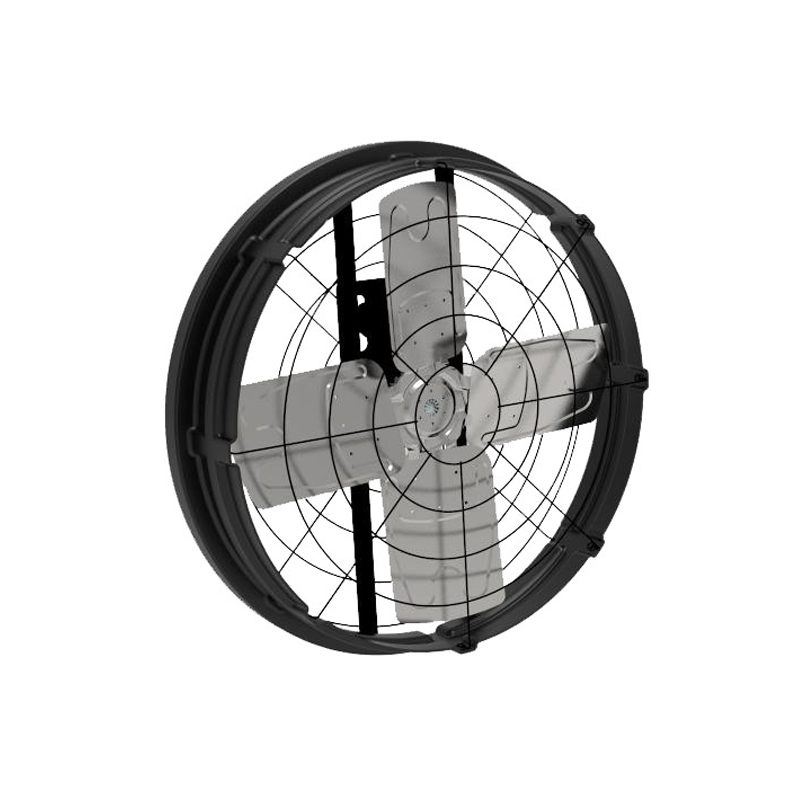
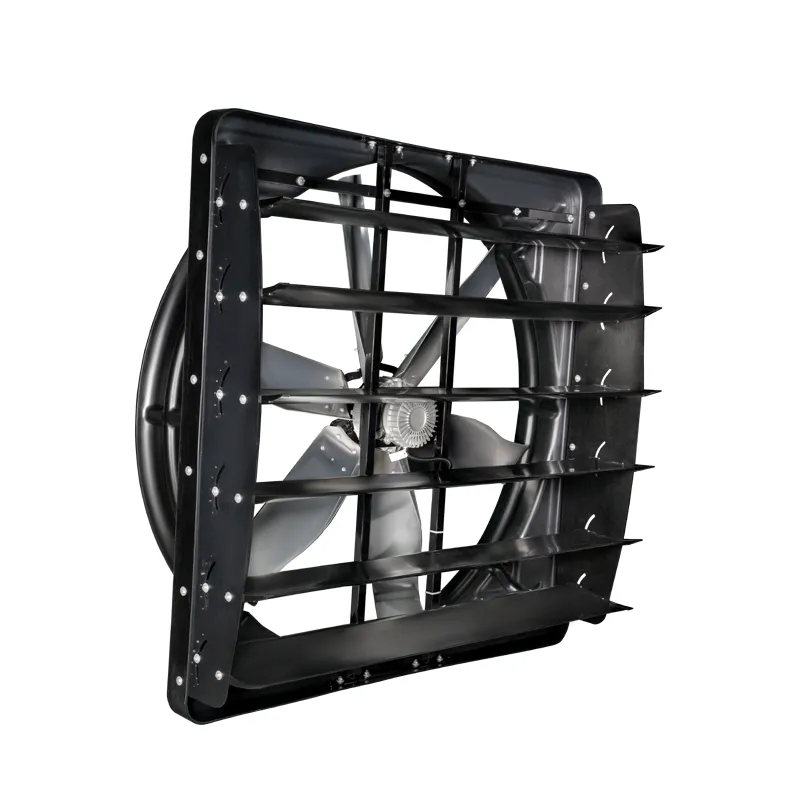
From the specialized standpoints of modern aerodynamics design and commercial livestock environment engineering, this 86 inch variable-frequency direct-drive panel fan operates as a premium, high-volume industrial-grade large-aperture columnar long-distance air supply system.
The main structural framework shell is composed of heavy-duty, impact-resistant fiberglass molded into a single seamless unit, offering supreme resistance against harsh barn environments. The core engineering breakthrough centers on the integrated guide vanes mounted directly across the air discharge aperture. Conventional axial fans split energy during peak rotation, causing air to fly outward along a tangential path, creating localized vortexes that collapse. Terrui addresses this velocity loss through precise Computational Fluid Dynamics calculations, creating specialized stainless steel grid vanes with distinct geometric angles. As the high-velocity air mass strikes these calibrated surfaces, its scattered centrifugal motion is reshaped, converting turbulent swirl into a high-density, axial laminar air column. This structural alignment allows the cooling air stream to extend deep into the facility layout.
Why
Operating standard, un-rectified ventilation lines across large commercial free-stall facilities subjects dairy operators to ongoing production losses and elevated capital expenditures:
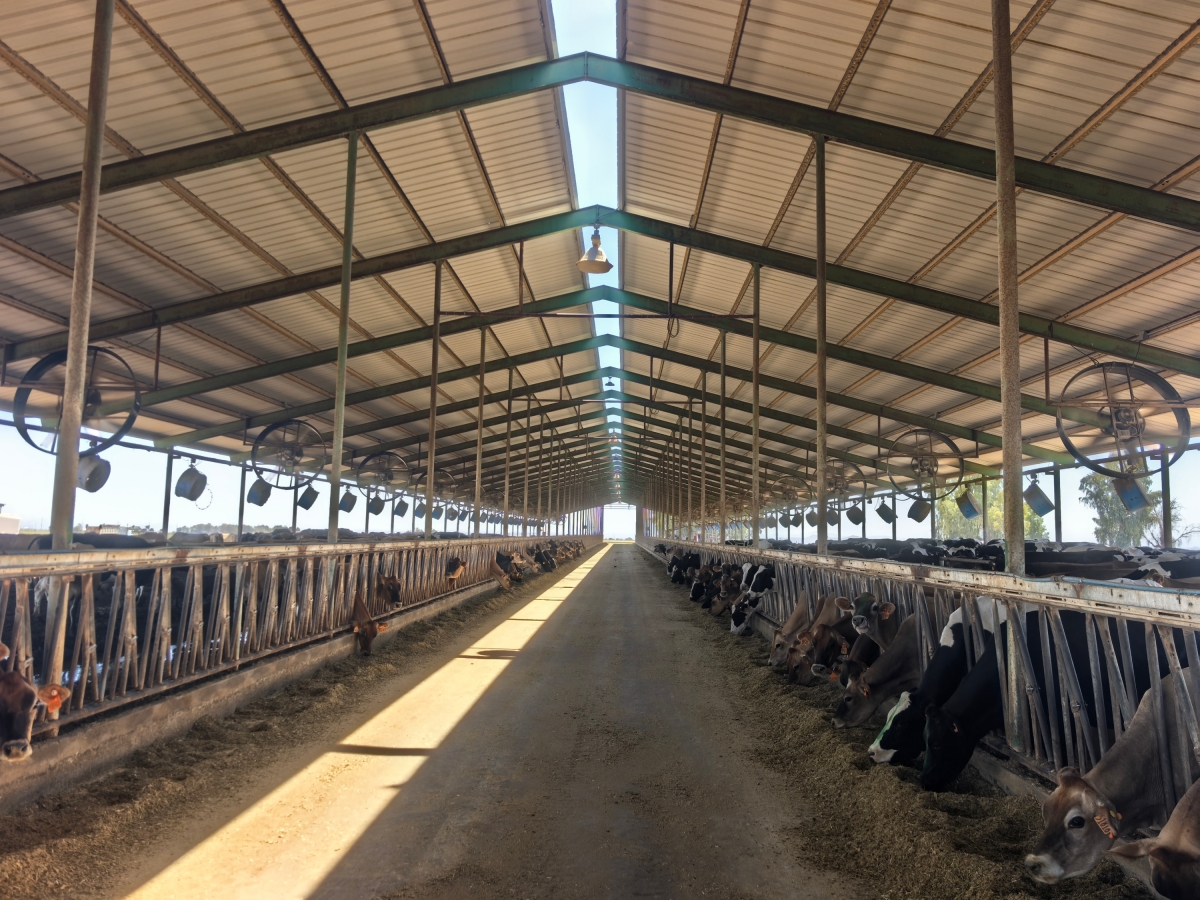
Short Delivery Ranges Creating Hot Zones: Standard agricultural exhaust fans typically feature an effective throw of only 5 to 6 meters. Beyond this distance, air velocity drops sharply, creating stagnant hot spots in the rear rows. This drop forces cows to crowd together directly underneath the closest operational fans, compounding heat stress.
Dense Equipment Layouts Raising Capital Overhead: To maintain consistent airflow over the entire herd, older barn designs require installing rows of fans every 6 meters. Hanging dozens of units across a single facility incurs high upfront purchasing costs, heavy electrical infrastructure investments, and large ongoing utility bills that drain raw milk profits.
Low Efficiency Linked to Traditional Belt-Driven Lines: Older metal fans not only lose velocity quickly but also rely on high-maintenance drive belts. In warm, ammonia-rich dairy environments, these belts frequently slip and snap. Our system utilizes an advanced permanent magnet direct-drive motor that is strictly beltless, removing transmission friction and delivering maintenance-free performance.
Technical Transition: This specialized dairy barn ventilation equipment utilizes advanced CFD guide vanes to stop these hidden profit drains: first, extended airflow range directly doubles effective delivery, ensuring cows in the furthest stalls receive consistent cooling; second, reduced machinery requirements let managers double the spacing between fan rows, cutting upfront equipment, wiring, and installation costs; third, the beltless direct-drive setup removes the hassle of belt maintenance, keeping the lines running quietly and smoothly through peak summer conditions while lowering overall labor costs.
How
Inside commercial free-stall facilities running under intense summer heat loads or navigating freezing winter environments, the low-decibel fan framework protects herd welfare and maintains profit margins through a structured three-stage process:
4.1 Stage 1: CFD Rectification Overcoming Air Stagnation
During peak summer afternoon heat waves when the Temperature-Humidity Index (THI) spikes, the farm operator activates the ventilation lines. The direct-drive fan lines ramp up smoothly, outputting a massive air volume of 155000 m³/h. As the air mass leaves the blades, the integrated CFD guide vanes instantly straighten the airflow. By correcting the 45-degree tangential spin into a concentrated linear column, the system generates a high discharge velocity of 6.5 m/s at the aperture, immediately breaking up stagnant hot zones and clearing localized ammonia gas.
4.2 Stage 2: Long-Distance Velocity Supporting Natural Stall Rest
As the column of air pushes forward through the barn, its streamlined structure minimizes kinetic energy loss. At a distance of 6 meters from the fan, the cooling velocity sustains a powerful 6.0 m/s convective stream. Even when the air mass reaches the core resting rows 12 meters away, the cooling velocity holds steady at 5.3 m/s. This stable, continuous breeze covers the resting herd, drawing off metabolic heat stress. The cows remain calm in their stalls, extending their natural rumination cycles and supporting daily milk synthesis.
4.3 Stage 3: Low-Speed Winter Micro-Circulation for Thermal Balance
When the facility transitions into the cold winter production season, the control framework updates its environmental profile to a low-speed micro-circulation mode. Linked with indoor humidity sensors, the fan runs at its lowest rated speed. Utilizing the precise alignment of the guide vanes, the system drives a gentle, controlled air current along the upper barn rows. This approach vents dampness and ammonia without generating cold drafts over the herd, maintaining a balanced heat distribution that prevents winter respiratory stress.
FAQ
Q1: What are CFD guide vanes, and how do they differ from a standard fan shroud?
A: Standard fans scatter air in a wide cone that breaks apart within 5 to 6 meters. Our specialized guide vanes are designed using Computational Fluid Dynamics (CFD), incorporating calibrated steel grids that reshape the spinning air mass into a straight, high-density column, extending cooling velocities much further down the barn.
Q2: If the fan maintains a 5.3 m/s velocity at a 12-meter distance, how does that save on installation costs?
A: Doubling the effective throw means each fan covers more area. When planning a modern dairy barn ventilation layout, the spacing between fan lines can be increased from 6 meters to 12 meters. This change cuts the total number of fans required per barn in half, significantly reducing upfront purchasing and electrical wiring costs.
Q3: Given the high ammonia and humidity levels inside a dairy barn, how long will this fiberglass housing last?
A: It is built for long-term durability. While standard sheet metal or thin iron fans can rust out within three years from ammonia exposure, Terrui uses heavy-duty, industrial-grade fiberglass. This material is completely rust-free and corrosion-resistant, providing an operational lifespan of over 10 years in harsh conditions.
Q4: What are the primary benefits of the EC direct-drive motor compared to traditional belt-driven fans?
A: Traditional fans rely on pulleys and belts that stretch, slip, and snap, requiring ongoing maintenance and generating high-frequency noise that stresses cattle. Our advanced EC motor is strictly beltless, driving the blade assembly directly to eliminate wear parts, reduce operating noise, and lower lifetime maintenance overhead.
Q5: Does the high velocity and extended throw create excessive noise that could disturb the herd?
A: No. Thanks to the one-time industrial riveting sequence used to secure the alloy blades, the assembly maintains exceptional dynamic balance. Combined with the natural sound-damping properties of the heavy fiberglass shell, full-load noise output stays below 70 decibels, allowing cows to ruminate in a peaceful environment.
Q6: Will running these long-distance fans during cold winter months drop barn temperatures too low?
A: During winter, the system automatically shifts to a low-speed ventilation profile. The fans run quietly at low RPMs, using the guide vanes to pull warm air down from the roof line. This micro-circulation vents moisture and gases while maintaining a balanced heat distribution, protecting the herd from draft stress.
Conclusion
Modern commercial dairy profitability depends on how efficiently a ventilation line converts electrical energy into effective cooling velocity. The Terrui 86 inch fiberglass wall fan utilizes advanced CFD guide vane technology to transform scattered airflow into a focused, high-density air column that delivers a strong 5.3 m/s breeze at a distance of 12 meters. This design overcomes the short coverage ranges, high utility costs, and heavy maintenance demands of older dairy barn ventilation systems. By combining high-volume output with an efficient, beltless direct-drive motor, this system offers producers an effective tool to optimize herd comfort and manage summer heat stress at a lower operating cost.


 English
  中文
中文  日本語
日本語  français
  Deutsch
  Español
  русский
  português
  العربية