Summary
The circulation fan is the only technical barrier preventing a total respiratory collapse in winter-enclosed dairy housing. As barns are sealed to protect the herd's thermal neutral zone, they inadvertently become gas chambers where ammonia (NH3) and moisture hijack the atmospheric quality. Because ammonia is a dense, water-soluble byproduct of manure decomposition, it doesn't just float away; it settles into a toxic "breathing zone" roughly 0.5 to 1.0 meters above the bedding. This report examines the application of circulation fan technology—specifically Terrui's PMSM-driven 115-A and 368-B series—as a tool for proactive atmospheric homogenization. By utilizing APP-based stepless modulation, these fans can be throttled to a whisper-quiet speed that disrupts gas stratification without triggering cold stress. This "Scrubbing" logic lifts heavy ammonia molecules into the upper barn volume, allowing them to be processed by secondary exhaust points. It is a biological safety protocol that protects the herd's mucociliary defense system during the highest-risk months of the year.
What: The Engineering Physics of Low-RPM Atmospheric Homogenization
Defining a professional winter circulation fan requires looking past the "cow cooling" mindset found in commodity hardware. This is a 3D atmospheric mixer. The efficiency of this process is dictated by the motor's torque density and frequency response at low Revolutions Per Minute (R/min). Terrui's 368-B and 368-A motor series utilize an outer rotor permanent magnet brushless DC architecture (EC motor) that maintains a high power factor even when operated at 20% of its rated capacity. While a 10HP (7500W) 368-B motor pulls 13.5A during peak summer, in "Winter Mode," it is digitally throttled to a fraction of that draw. Unlike traditional AC induction motors that suffer from "frequency slip" and overheating when run at low speeds, the PMSM driver ensures the circulation fan remains thermally stable during 24/7 winter cycles.
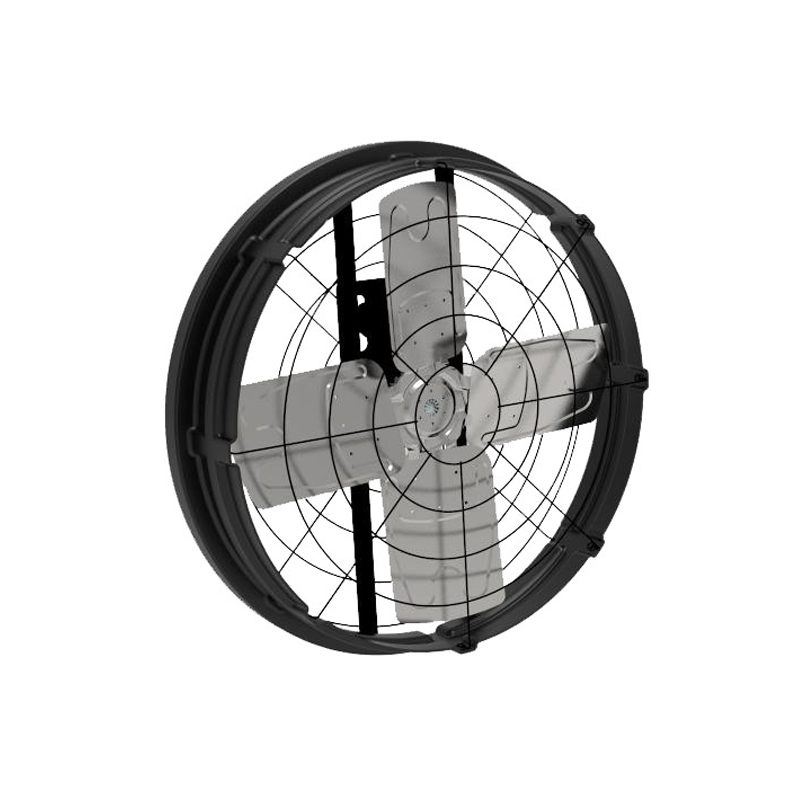
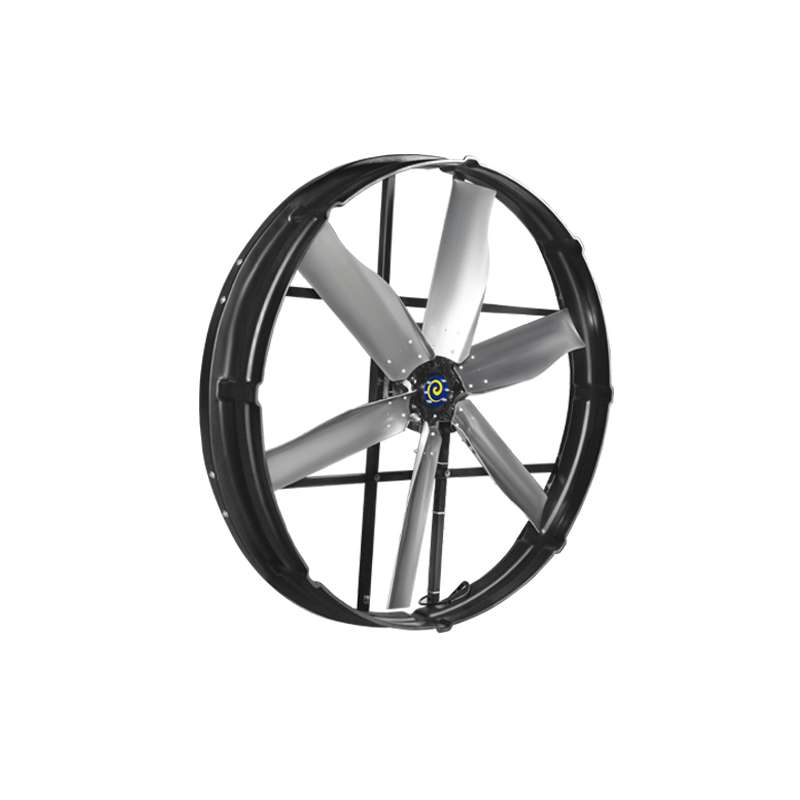
The structural composition of the circulation fan is equally critical for winter performance. Each unit features a high-strength, double-layer Polyethylene (PE) frame. PE is the only viable material for enclosed winter barns because it provides absolute immunity to the condensation-induced corrosion that turns galvanized steel fans into scrap metal within three years. The aerodynamic assembly—utilizing balanced 304 stainless steel or high-grade alloy blades—is engineered to move air in a laminar column. At low winter speeds, this creates a gentle vortex with just enough kinetic energy to displace floor-level gases without creating a draft that strips the cow's thermal boundary layer. With an integrated 0-10V signal interface, these circulation fan units function as smart nodes, allowing for atmospheric granularity that was historically impossible with standard "on/off" ventilation logic.
The motor itself uses high-coercivity rare earth magnets that maintain magnetic flux density even in the high-humidity "sweat" of a closed barn. This ensures that the circulation fan maintains its torque even when the air is heavy with moisture. The integrated EC controller manages the magnetic field in real-time, micro-adjusting the pulse-width modulation (PWM) to ensure the 114-inch or 72-inch blades provide a consistent, non-pulsing air exchange. It is an engineering shift from "moving air" to "managing air hygiene," where every watt is accounted for. The PE housing further prevents acoustic resonance, meaning the winter purification process is virtually silent, reducing cortisol spikes in the herd.
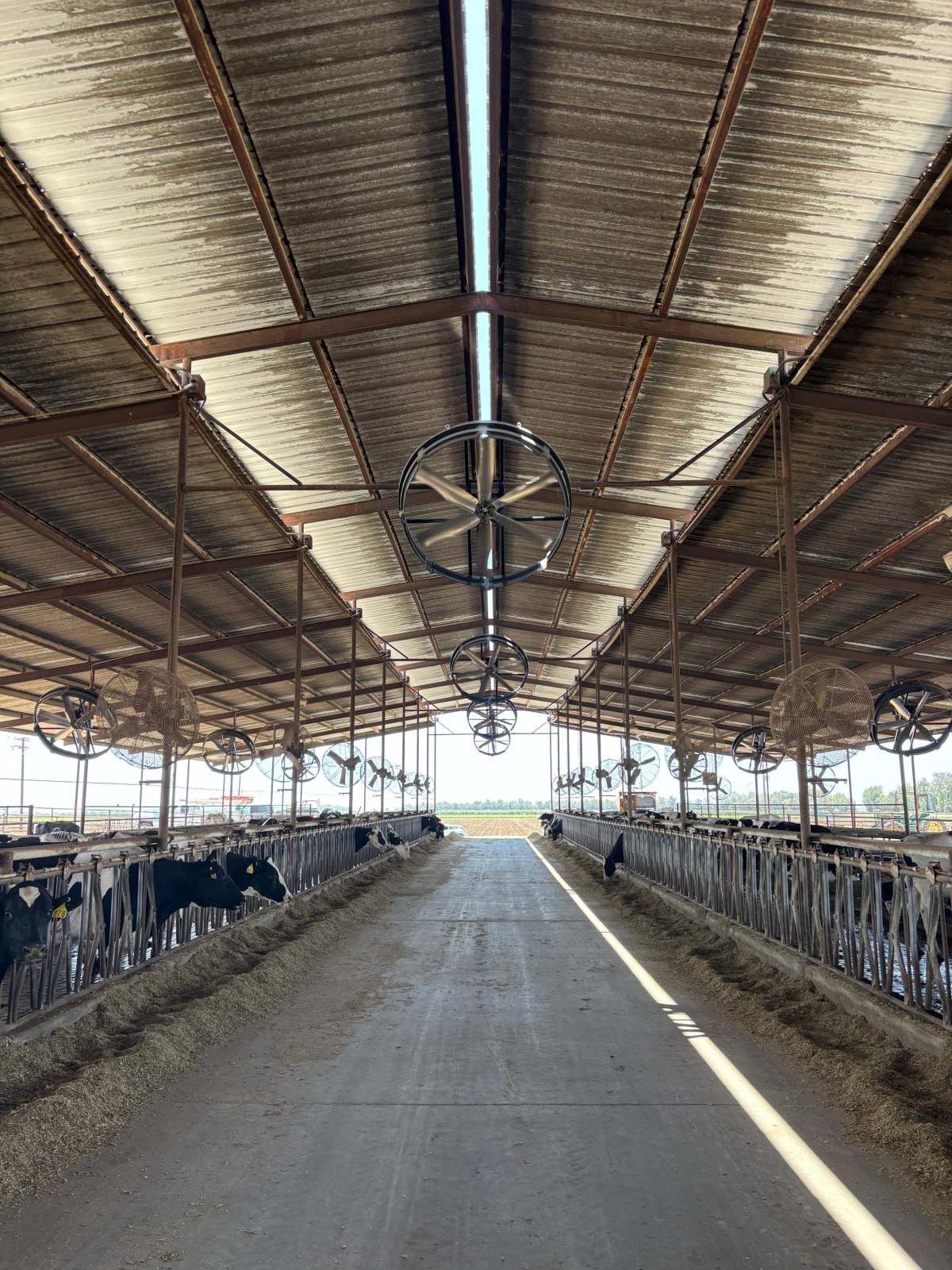
Why: Analyzing the "Mucociliary Elevator" and the Ammonia Fog
Why is a low-speed circulation fan a survival requirement for modern ranching? It comes down to the fluid dynamics of ammonia and the biological resting behavior of a 700kg cow.
The Pathology of the 0.5-Meter Breathing Zone A healthy dairy cow spends 12 to 14 hours per day lying down. During this time, her muzzle is positioned 0.5 to 0.8 meters above the bedding—the exact zone where ammonia (NH3) and moisture concentrations reach their toxic peak. Ammonia is a cytotoxic sledgehammer. It doesn't just "smell bad"; at concentrations as low as 20 parts per million (ppm), it paralyzes the cilia in the cow's trachea. These microscopic hairs are the "mucociliary elevator," the primary defense against airborne pathogens. When this elevator is immobilized, bacteria like Pasteurella and viruses like BRSV settle deep in the lungs. This leads to Bovine Respiratory Disease (BRD), which is the #1 killer of calves and a massive drain on adult cow ROI. The circulation fan is the only tool that can physically break this "ammonia fog" at the ground level.
Homogenization vs. Thermal Stripping and Cold Stress In a sealed winter barn, the air is stratified. Warm, clean air stays at the ceiling while cold, toxic air sits on the cows. If you run your circulation fan at summer speeds, you strip the cow of its thermal boundary layer, forcing it to burn energy for heat rather than milk production. This is an ROI disaster. However, by using the APP to modulate the Rare Earth EC motor to a "whisper" speed (maintaining an animal-level wind speed below 1.5 m/s), the circulation fan disrupts the gas layering without chilling the herd. You are essentially using the fan as a scrubbing tool to lift toxins into the upper barn volume, where they can be effectively processed by ridge vents.
The Economic Cost of Winter Stagnation and Respiratory Loss Ranchers often think they are saving money by turning off their circulation fan in the winter. This is a false economy. The cost of a single BRD outbreak—including veterinary fees, antibiotics, and the permanent loss of future production—far outweighs the negligible power draw of a 368-B motor running at 25% capacity. By maintaining a clean breathing zone, you protect your Dry Matter Intake (DMI) and ensure the herd's immune system remains focused on production, not survival. The circulation fan is a biological insurance policy for your most valuable assets.
Relative Humidity and Pathogen survival In the stagnant air of a closed barn, relative humidity (RH) often exceeds 90%. This is a petri dish for environmental pathogens. High RH prevents the bedding from drying, leading to skin infections and damp coats that increase the risk of cold stress. The circulation fan facilitates constant moisture evaporation. Even at low speeds, the air movement helps keep the stall surface dry, reducing the survival rate of airborne bacteria. Because the Terrui PMSM motor is so efficient, you can run this drying process 24/7, essentially using air as a "natural disinfectant" to maintain barn biosecurity.
How: Implementing the Digital "Scrubbing" Protocol for Winter Air
Executing a successful winter air quality strategy requires a shift from "human intuition" to "digital precision." Follow this technical protocol for the Terrui circulation fan range:
Step 1: Calibration of "Winter Mode" Speed Profiles Using the Terrui APP, each circulation fan must be assigned a specific winter speed profile. For a 72-inch unit with a 254-series motor (2000W), the R/min should be restricted to approximately 20-25% of its rated capacity. This creates enough pressure to break gas stratification without causing shivers. For the massive 114-inch circulation fan, the 10HP 368-B motor should be set to a low-load cycle. This draws minimal current—often less than 2A—while purifying a massive 3D footprint of air, ensuring that the air at the back of the stalls is just as clean as the air at the ridge.
Step 2: Synchronized Vortex Creation and Stagnation Mapping Rather than running fans as independent units, they should be grouped to create a unified air-mixing logic. In a standard barn, fans over the feed lane and those over the stalls can be synchronized to move air in a slow, circular pattern. This prevents "stagnant pockets" in corners where moisture and manure levels are higher. By coordinating the circulation fan array, ranch managers ensure that the entire facility maintains a consistent NH3 concentration below the 10 ppm threshold. If you have a dead spot, the circulation fan isn't doing its job.
Step 3: Sensor-Responsive Ammonia Mitigation and Automation The most advanced application involves connecting the circulation fan grid to real-time ammonia (NH3) and relative humidity (RH) sensors via the 0-10V interface. If the gas concentration at the 1.0-meter mark exceeds a pre-set safety limit (e.g., 15 ppm), the APP control system can automatically ramp up the fans by a 5% increment. This "Proactive Purification" ensures the breathing zone remains safe even if the barn’s moisture levels spike during a warm front. The circulation fan becomes a self-correcting node in the facility's biosecurity plan.
Step 4: Managing Corrosion and Condensation in Enclosed Barns Winter barns are notoriously corrosive. High humidity + Ammonia = Metal Death. The IP55 protection rating of the circulation fan motor and the non-corrosive PE frame are essential for 24/7 winter operation. We recommend a simple monthly inspection of the stainless steel blades. Dust buildup in the winter can be sticky due to the humidity; keeping the blades clean ensures the circulation fan maintains its whisper-quiet aerodynamic balance, which is vital for a low-stress barn atmosphere.
FAQ: The Skeptical Engineer's Winter Ventilation Checklist
1. Does running a circulation fan in winter increase the risk of mastitis by blowing on udders?
No. When the circulation fan is modulated to its low-speed "purification" setting, the wind speed at the animal level stays below 1.5 m/s. This is insufficient to cause the teat-end chilling associated with mastitis risks. In fact, by drying the surface of the bedding, the circulation fan actually reduces the environmental bacterial load that causes mastitis. You're trading a cold teat for a dry bed.
2. Is the energy consumption of a 10HP fan worth it for winter air purification?
Yes, because the power draw is non-linear. In "Winter Mode," a 10HP 368-B circulation fan uses only a fraction of its power—often less than 800W. This is a negligible cost compared to the $5,000+ loss from a single respiratory disease outbreak. You are paying for "air hygiene," which is significantly cheaper than medicine and carcass disposal.
3. Why not just use exhaust fans to remove the ammonia?
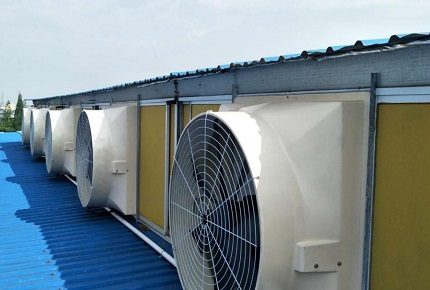
Exhaust fans remove air, but they don't necessarily "mix" it. Without a circulation fan to break the stratification, you can have "fresh" air moving through the top of the barn while the cows are still breathing toxic ammonia at the bedding level. The two systems must work in tandem to be effective. The circulation fan is the "scrubber"; the exhaust fan is the "trash chute."
4. Can the APP control different sized fans (e.g., 38" and 114") at the same time?
Absolutely. The Terrui digital ecosystem allows for hybrid grouping. You can have a 38-inch calf hutch circulation fan (115-A motor) and a 114-inch barn fan (368-B motor) running on the same winter logic, each modulated to its respective ideal low-speed R/min. The circulation fan grid becomes a unified atmospheric tool.
5. How does the PE frame handle the extreme humidity of a closed winter barn?
Unlike galvanized steel, high-strength double-layer PE is chemically inert. It does not rust, pit, or corrode when exposed to the high moisture and ammonia levels found in winter dairy housing. The circulation fan frame remains structurally sound for 10+ years where metal units fail in three. It's built for the "sweat" of a 500-head barn.
6. Is there a specific mounting height for optimal winter gas mixing?
For general barn purification, the standard mounting height of 4 to 6 meters is effective, provided the downward tilt is set between 15° and 25°. This ensures the air column of the circulation fan reaches the floor to lift the ammonia before mixing it with the cleaner air volume above. If you mount it too flat, the gas stays on the floor.
Conclusion: Engineering the Breathing Zone
The strategic deployment of the circulation fan as a tool for winter air quality is the next frontier in precision livestock farming. By leveraging the low-speed efficiency of the PMSM 368-A and 368-B series, ranch managers can successfully navigate the winter paradox—maintaining warmth while ensuring a purified breathing zone. Disrupting ammonia stratification is not merely an environmental goal; it is a direct investment in the respiratory health and immune resilience of the herd. As dairy facilities continue to adopt integrated APP control systems, the ability to modulate airflow with surgical precision will define the new standard for animal welfare. Stop guessing with your winter ventilation and start engineering it.


 English
  中文
中文  日本語
日本語  français
  Deutsch
  Español
  русский
  português
  العربية