Summary
Cattle drinking bowls are the smallest piece of water equipment on a dairy or beef unit, and they are usually the one that decides how much water your herd actually drinks. Get the bowl right and cows drink whenever they want, you stop hauling hoses, and less water ends up soaking the bedding. Get it wrong and you are back to cleaning a trough twice a day while your vet bills tell the story.
This guide stays on the practical side of buying: what the numbers on a spec sheet mean, which two sizes cover most sheds, how the float valve changes your water bill, and what to check in the three steps of an install. We use Terrui's cattle drinking bowls as the working example, because the published figures make the trade-offs easy to see — 9.3 L and 4 L bowls, both rated at 6 L per minute, in housings rotomolded from impact-resistant polyethylene.
What Are Cattle Drinking Bowls?
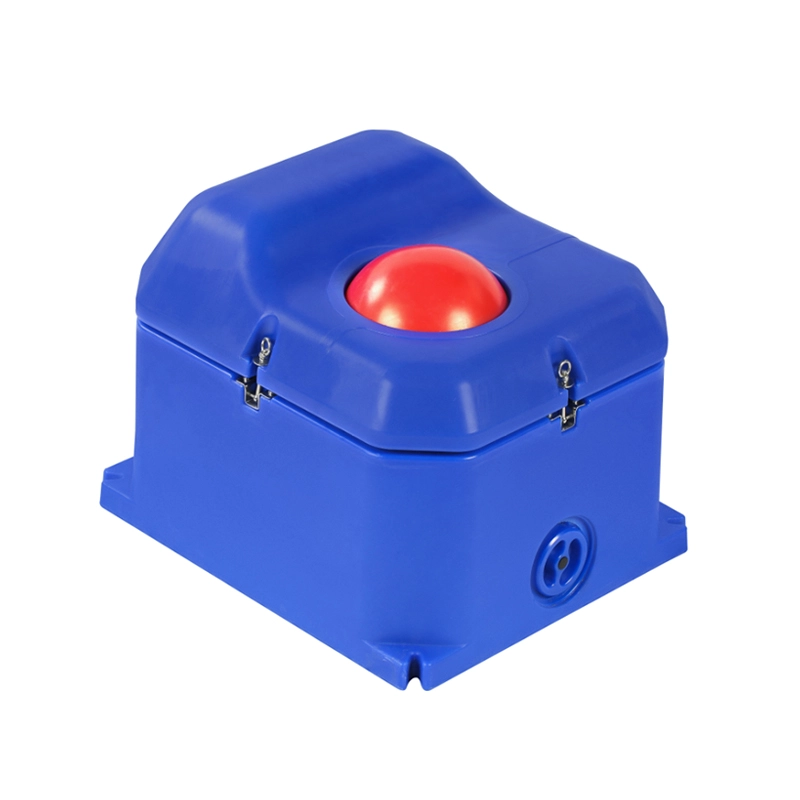
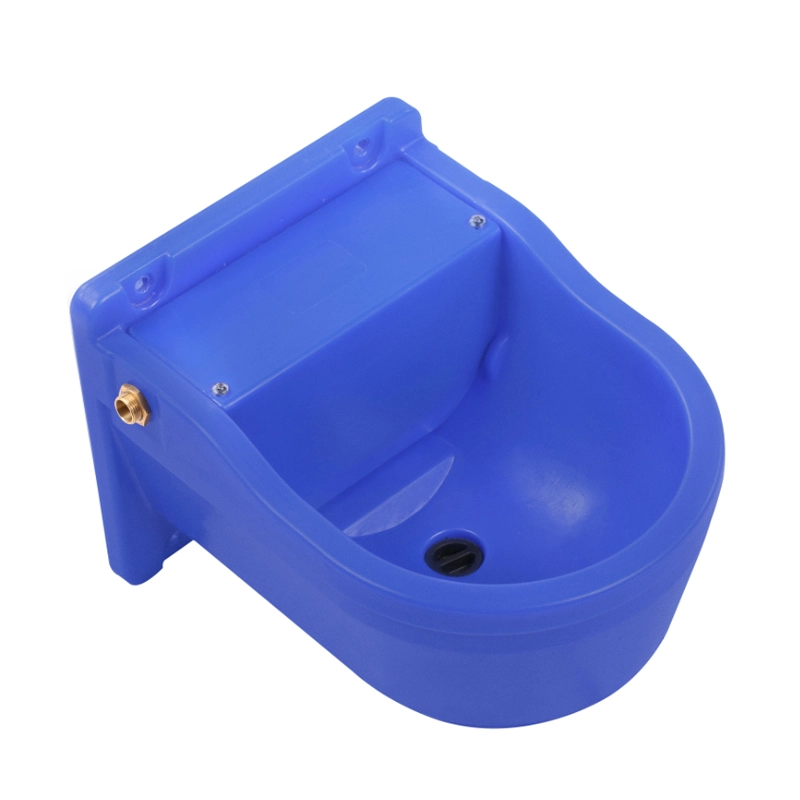
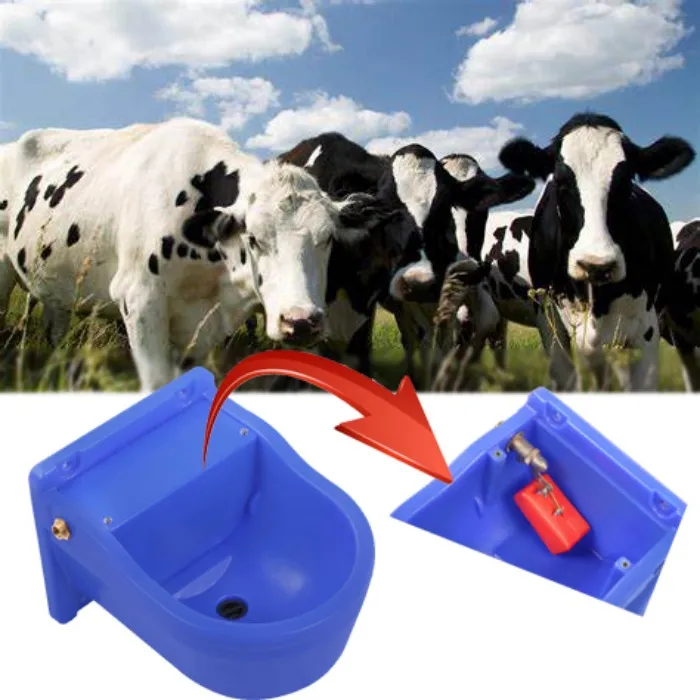
A drinking bowl is a small, self-filling water vessel mounted on a wall, a post, or a concrete kerb. Water arrives through a supply line, a float valve holds the level, and cows push their muzzle in to drink. There is no manual filling, and no gate to open.
Farmers describe the same fixture in several ways — a cow water drinking bowl, a water drinking bowl for cattle, an automatic drinker — and every one of those names points at the same thing: a bowl that refills itself and keeps the water clean between visits.
The auto-fill part is what separates a bowl from a bucket. A sealed, automatically controlled float valve keeps a constant level and shuts the flow off as soon as the bowl is full. Terrui describes its own valve as high-flow, and notes the water-saving side effect plainly: less spillage, less waste water, and lower load on whatever treatment system handles your dirty water.
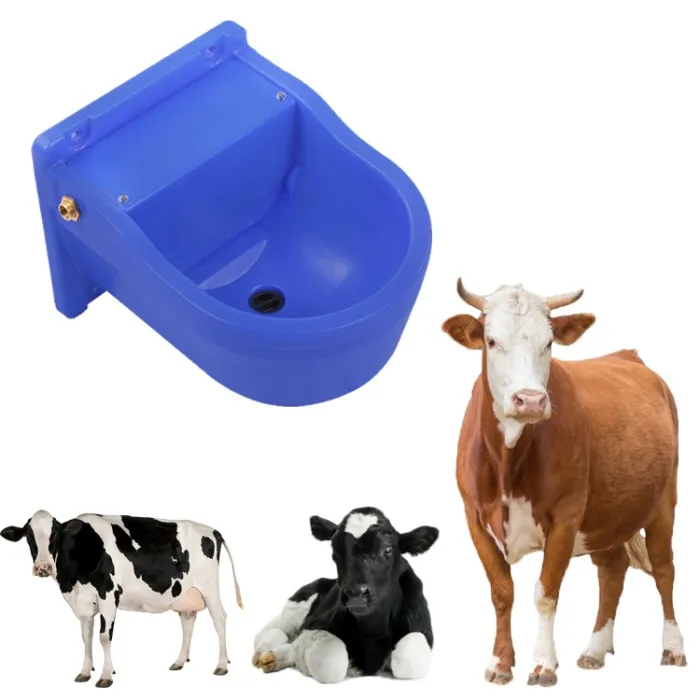
Two models cover most farms. The larger one, part number TRW405DBLL, is 40 cm long, 29.7 cm wide and 28 cm high (16", 12", 11"), and holds 9.3 litres (2.5 gallons). The compact TRW305DBLM is 30 cm by 22.5 cm by 23.5 cm (12", 9", 9") and holds 4 litres (1 gallon). Both are rated at 6 litres per minute — about 2 gallons per minute — and both ship with a braided hose connection, packed two or four to a carton.
They suit cows and beef cattle alike, which matters if you run a mixed operation and want one spare part box on the shelf instead of three.
Why Cattle Drinking Bowls Beat Open Troughs
Water intake drives milk yield, and intake drives how easy the water is to reach. A cow that has to walk to a shared trough, wait for a dominant herd mate to leave, and drink from a surface covered in feed and algae will drink less than she should. Move the water to her pen and the problem largely disappears.
Hygiene is the second win. Open troughs collect hay, manure, and whatever the wind brings. Someone has to drain and scrub them, and in most barns that job slips when the day gets busy. A bowl has a small open surface, drains quickly, and cleans in a minute. Terrui designed both models for exactly that — easy installation, easy cleaning, and a water surface that stays clean for longer stretches.
Then there is the labour line on your cost sheet. Filling and scrubbing troughs is time you cannot bill to anyone. Multiply the minutes by the number of pens and you have a real annual figure, even before you count the water itself.
Winter brings the third argument. A bowl's small water volume is easier to keep thawed than a long, wide trough, though you still have options to weigh. Farms that already run a heated stainless panel cattle water trough for the main groups often find bowls work better at the far end of the shed where a trough cannot be reached.
One more practical point: bowls spread the risk. If a single trough line fails, every animal in that group is dry. Separate bowls on separate drops mean a failure affects a handful of pens, not the whole barn.
Two smaller design points are easy to overlook, and both show up later. The first is safety. Terrui states that its automatic cow drinker is designed so the drinking system cannot injure the animals using it — nothing sharp, nothing exposed at muzzle height, nothing for a cow to catch herself on when she pushes forward. In a pen where animals crowd around water, that matters more than it sounds.
The second is consistency. The auto-fill function holds a steady level, so water is there when an animal arrives instead of arriving after she has given up and walked away. Consistent access is what the manufacturer means when it says the bowl promotes hydration and health, and it is the reason these bowls suit such a wide range of livestock environments — from a small calf pen through to a large beef yard.
How to Compare Cattle Drinking Bowls: 6 Specs That Matter
Spec 1 — Dimensions and mounting height. These are two bowls in different size classes, not two finishes of the same product. TRW405DBLL at 40 cm by 29.7 cm by 28 cm suits adult cows and mature beef cattle. TRW305DBLM at 30 cm by 22.5 cm by 23.5 cm fits tighter stall layouts, calf pens, and retrofit corners where the bigger bowl fouls the passage. Measure the mounting surface before you order — the 9.3 L unit is 10 cm longer and more than 6 cm wider than the small one.
Spec 2 — Capacity. 9.3 L (2.5 gal) against 4 L (1 gal). Capacity is a buffer, not a drinking rate. It buys you time between the valve opening and the animal finishing, and it covers brief supply dips. Larger capacity also means a heavier bowl when full, so the mounting hardware needs to be solid. Both sizes share the same 6 L per minute flow, so on a fast-drinking group the bigger bowl simply refills less often.
Spec 3 — Flow rate. Both models are published at 6 L/min (2 gal/min). This is the number that quietly decides how many bowls your water line can carry. Put four 9.3 L bowls on one supply drop and the last bowl in the run may starve at peak demand. Do the arithmetic before installation, not after the complaint reaches you from the milking parlour.
Spec 4 — Housing material and process. Terrui bowls are made from heavy-duty, impact-resistant polyethylene, produced in a one-time rotomolding process. The page is specific about the payoff: strong fall resistance, high strength, and a longer service life. If a supplier's data sheet does not say how the housing is formed, treat that as a gap.
Spec 5 — Valve type and water control. This is where the money sits. A sealed, automatically controlled float valve holds a constant level and closes cleanly once the bowl is full. That reduces spillage, cuts waste water volume, and lessens the load on your effluent handling. A worn or poorly sealed valve drips continuously, and a continuous drip in a barn is a water bill with no upside.
Spec 6 — Packing, spares, and documentation. Bowls ship in multi-unit cartons: 2 pieces per carton for TRW405DBLL, 4 pieces per carton for TRW305DBLM. Carton quantities tell you how a factory actually builds and stocks the item, and they set your minimum sensible order.
How the Details Differ Across a Building
No single bowl fits every pen. A working layout usually mixes three types of equipment, and the skill is in knowing which pen gets what.
For large groups in open sheds or under a loafing area, a long cattle water trough gives many animals a drink at once and needs few supply points. For smaller groups, individual stalls, and corner positions, cattle drinking bowls win on hygiene and labour. Where you maintain a mixed farm, the same logic applies to small stock, and a sheep and goat water drinker does the equivalent job in the lambing pens.
There is also a maintenance angle. A single-hole cow water trough works well in the dry cow paddock where only one animal drinks at a time, and it shares the low maintenance profile of a bowl. Where the job is teat hygiene rather than drinking water, the return teat dip cup sits in the same "small, reusable, easy to clean" family of dairy tools — same design philosophy, different purpose.
Beef units tend to standardise on fewer, larger fixtures; dairies tend to distribute more, smaller ones. Neither is wrong. The test is whether every animal can reach water within a short walk, at a moment when she wants it. If you are planning a whole building at once, it helps to look at the full cattle drinker range side by side, because trough and bowl lengths interact with pen geometry more than most buyers expect.
How to Install Cattle Drinking Bowls in 3 Steps
Terrui's own installation guidance breaks into three steps, and each one answers a question that comes up later as a complaint. Follow them in order.
Step 1 — Choose the location first. Pick a level spot that is easy for cattle to reach and close enough to a reliable water source to make the inlet connection short and simple. If you are fitting more than one bowl, leave enough space for animals to drink without crowding. Crowding at one bowl is the most common cause of "the bowl is too small" complaints — often the bowl is fine and there are simply not enough of them.
Step 2 — Secure the bowl properly. Fix it to the ground or the wall, depending on the model and your layout, using durable fixtures. Cows lean, push, and rub. A bowl that shifts will stress the supply connection until it leaks, and then you are dealing with a wet pen as well as a water loss.
Step 3 — Connect the water inlet with care. Shut the supply off before you start. Attach the hose or pipe to the inlet valve on the bowl, and make the joint tight and secure. Check that your connectors suit the bowl — most units are built for standard water lines, but confirm against the spec before you cut anything. Then open the supply slowly, watch the valve seat and the joint, and tighten whatever weeps. Running the supply wide open into an unproven connection is how a simple install becomes a flooded pen.
Cattle Drinking Bowls FAQ
How many drinking bowls do I need for a group of 40 cows?
Think in terms of access, not one bowl per animal. The test is whether cows can drink without waiting behind a dominant herd mate. In practice, several bowls spread along a pen beat one central fixture, even when total capacity is identical.
Should I choose the 9.3 L or the 4 L bowl?
Match the bowl to the animals and the space. TRW405DBLL (9.3 L) suits adult cows and mature beef cattle and gives a bigger buffer between refills. TRW305DBLM (4 L) fits tighter stalls, calf pens and retrofit positions. Both deliver the same 6 L/min flow, so the choice is mostly about physical fit and buffer volume.
Do cattle drinking bowls waste less water than a trough?
Yes, for a structural reason rather than a marketing one. A small, sealed bowl exposes very little water surface, so there is less spillage, and the float valve closes when the level is right instead of running continuously. Terrui notes that this also reduces waste water volume and eases the load on sewage treatment.
Can I use the same bowls for beef cattle?
Yes. The published application range covers cows and beef cattle, and the mounting method is the same. Beef units often prefer fewer, larger fixtures, which is a layout decision rather than a product limitation.
What about freezing weather?
A small bowl holds less water to freeze than a long trough, which helps, but a bowl is not a heating system. In hard winters you either heat the supply or drain the line, and where heating is already installed across the farm, a heated trough may be the better answer for the main groups.
How often do the float valves need attention?
Valves are the wear item. Check the level and the valve seat each time you walk the pens, and look for any continuous trickle when no animal is drinking. A drip that runs all day costs more than the parts to fix it.
Conclusion
Cattle drinking bowls reward a short, careful buying process. Check the six specs — dimensions, capacity, flow rate, housing material, valve type, and packing — against the pens you are actually fitting, then install to the three steps and keep an eye on the valves. Do that and water intake stops being a hidden constraint on performance.
If you are equipping a new shed or replacing worn troughs, start from the cattle drinking bowls range and request the specification PDF and a quote. Compare dimensions and flow against your water line, and ask which model suits your herd size before you commit to a carton.


 English
  中文
中文  日本語
日本語  français
  Deutsch
  Español
  русский
  português
  العربية