Summary
Picking poultry fan manufacturers is not like buying from a parts catalog. You are choosing a partner for the next five to ten years of barn ventilation, and the difference between a good factory and a bad one shows up in bird health, electricity bills, and downtime. Sourcing from China adds distance, so the checks you run before signing matter even more. This guide lays out seven checks we suggest running against any shortlisted factory — starting with real product specs like airflow and motor type, moving through documentation such as CE certificates, and ending with the practical questions about MOQ, lead time, and after-sales support. Terrui is one example of a Shanghai-based poultry ventilation fan manufacturer that passes these checks, and we use our own operation to illustrate what to ask and why. Read it before you send your next inquiry, and keep it open while you compare the replies — the checklist works best when every factory answers the same questions.
What Does a Poultry Fan Manufacturer Actually Do?
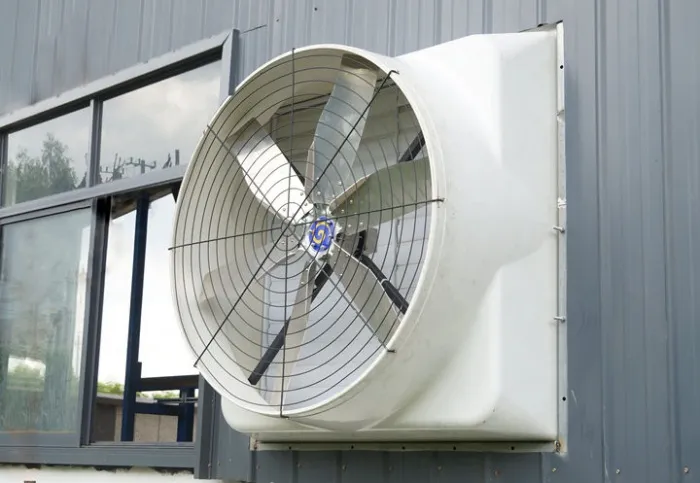
A poultry fan manufacturer designs, builds, and ships the fans that keep a poultry house ventilated — exhaust fans that pull stale air out, circulation fans that keep air moving inside, and the cooling setups that protect birds in summer heat. The good ones do not just assemble motors and blades. They engineer the airflow, choose materials that survive ammonia and humidity, run quality checks, and handle the export paperwork that gets the fan to your door.
Terrui's product line shows the shape of a full-range supplier. The poultry ventilation cooling fan category sits at the center, with panel and circulation models in the wider range, and the line also extends to industrial exhaust fans, 48-inch exhaust fans, and circulation fans for larger buildings. A manufacturer that covers several sizes and categories is easier to work with long term, because you can consolidate orders instead of juggling multiple factories.
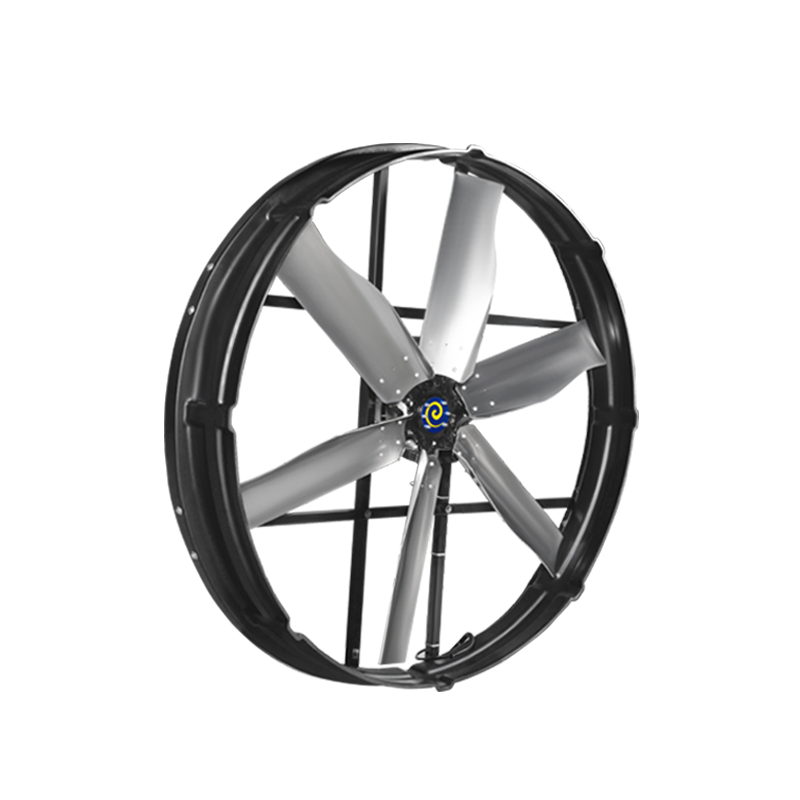
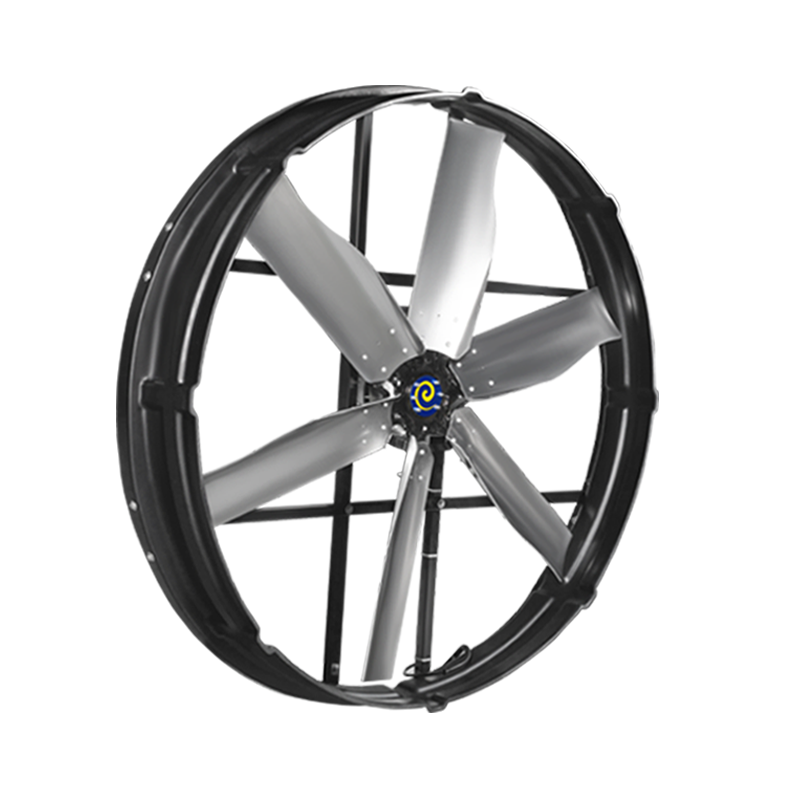
The real test is whether the factory can talk specs, not just prices. Ask any serious supplier for the numbers behind their fans and you should hear concrete values. Terrui's 48-inch model, for example, carries the designation YDA048DECKA0, with a blade diameter of 48 inches, rotation speed of 460 RPM, airflow of 55,000 cubic meters per hour, power of 1150 watts, and voltage range of 380-480V. Numbers like that let you compare fans honestly — and any manufacturer that cannot produce equivalent figures for its own models deserves a second look. Do the same comparison across the models you actually need, because a factory can be excellent at one size and weak at another, and you are sourcing the whole range, not a single SKU.
Why the Choice of Poultry Fan Manufacturers Matters
The fan you install today runs for years, and its performance decides whether your birds are comfortable or stressed. A poultry house fan that moves less air than promised means heat stress in summer, wet litter in winter, and ammonia building up between flocks. The birds pay the price first, and your feed conversion pays it after.
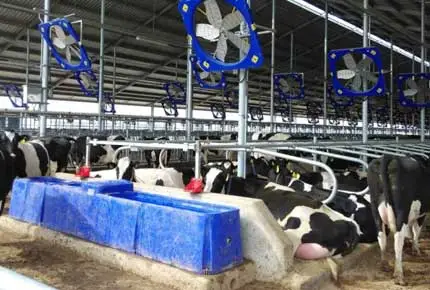
Air quality is the health story. Poultry are sensitive to temperature swings and to the ammonia and gases that accumulate in a closed house. A properly sized ventilation system keeps temperature in range, pulls out ammonia, and brings in fresh air — which is exactly the job Terrui describes for its farm cooling fans. When the fan underperforms, litter stays wet, footpad problems appear, and mortality creeps up. The factory you choose is the first link in that chain.
There is an economic argument too. Fans run for thousands of hours a year, so motor efficiency and blade design show up directly on the power bill. A fan that draws the advertised wattage but moves less air is costing you money twice — once in electricity, once in lost performance. That is why spec sheets matter: they are the only tool you have to compare efficiency before you buy. Run a fan season after season and small differences in airflow-per-watt turn into real money, which is why buyers who skip this step usually end up re-sourcing within a couple of years.
Then there is the relationship side. Exporting fans from China means dealing with lead times, shipping, documentation, and the occasional warranty claim. A manufacturer with a real export process — CE documents in order, responsive communication, clear warranty terms — saves you from headaches that have nothing to do with the fan itself. Terrui, for instance, runs out of Shanghai and publishes its CE certification and warranty policy openly, which is the kind of transparency worth looking for in any poultry fan manufacturers shortlist.
How to Run the 7 Factory Checks on Poultry Fan Manufacturers
Check 1: Ask for the real specifications. Start with the numbers: blade diameter, rotation speed, airflow in cubic meters per hour, motor power, voltage, and frequency. Compare like for like. A 48-inch fan should deliver somewhere in the range of 50,000 to 60,000 m³/h at typical operating speeds — Terrui's YDA048DECKA0 lists 55,000 m³/h at 460 RPM, which is a realistic benchmark. If a supplier answers airflow questions with vague phrases instead of numbers, walk away.
Check 2: Look at the motor and blade technology. The motor and blades decide efficiency and lifespan. Terrui's 48-inch model uses a permanent magnet synchronous motor — direct drive, good heat dissipation, high efficiency, large torque, and long service life — with aluminum alloy blades that are balanced for low noise and high air volume. Ask your candidate what motor technology they use and why. Permanent magnet and direct-drive designs generally beat belt-driven systems on maintenance and efficiency.
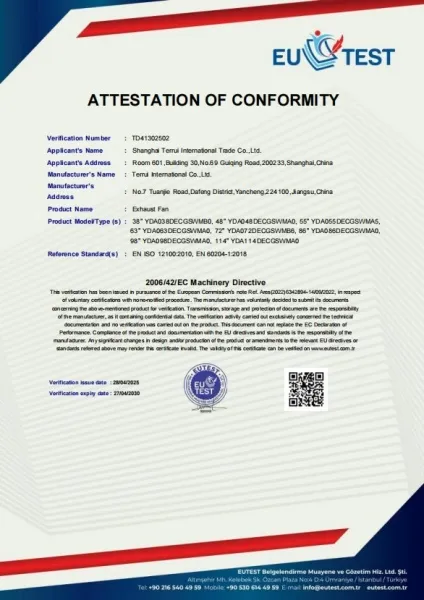
Check 3: Verify certificates and documents. CE certification is the baseline for selling into Europe and is respected worldwide. Ask to see the certificate, not just a mention on a website. Check the certificate number against the issuing body. Beyond CE, ask about manuals, test reports, and the paperwork included with each shipment. A manufacturer that cannot produce documents quickly will also be slow when you need export paperwork later.
Check 4: Assess customization ability. Poultry fan manufacturers differ a lot here. Can the factory do custom voltage, custom blade sizes, or private label? Terrui positions itself as a custom manufacturer covering everything from standard exhaust fans to HVLS industrial ceiling fans and centrifugal models, which signals real production depth. If your market needs 230V or 60Hz versions or a specific size, confirm the factory can handle it before you commit.
Check 5: Probe quality control and materials. Ask what happens between production and shipping. Is there a run test on every fan? What materials are used for the housing and blades — and do they survive ammonia, humidity, and outdoor exposure? Galvanized or coated housings and aluminum blades are common markers of decent build quality. A factory that cannot describe its QC process is a factory you should not trust with a container load. If you can, ask for photos or a video of the production line and the test bench; a manufacturer that shows its process openly is usually proud of it.
Check 6: Talk about MOQ, lead time, and terms. The commercial terms matter as much as the engineering. What is the minimum order quantity? How long from order to shipment? What are the payment terms? How does the factory handle a defective unit — replacement, credit, or silence? Terrui publishes its contact channels openly and responds to quote requests through its site, which is exactly the level of commercial responsiveness to look for.
Check 7: Test communication and after-sales support. Send a detailed inquiry and see how fast and how well the supplier answers. Good manufacturers answer technical questions technically and commercial questions commercially, without blurring either. Ask about the warranty explicitly — Terrui states that it offers a warranty on its livestock cooling fans and invites buyers to contact for specifics, which is the right way to handle it. Slow or vague responses during the sales process will only get worse after you pay, so treat the inquiry stage as a preview of the working relationship.
Poultry Fan Manufacturers FAQ
How do I compare quotes from different poultry fan manufacturers?
Convert everything to the same units and compare the specs, not just the price. Look at airflow per watt, blade diameter, motor type, and included accessories. A cheap fan that moves less air or burns more power is not cheap at all once you run the numbers over a season.
Is CE certification enough to trust a factory?
CE is a good baseline but not the whole story. Ask for the certificate, check it against the issuing body, and also ask about test reports and the quality control process. Documentation plus a responsive commercial process gives you a much fuller picture than a logo on a website.
What airflow should a poultry house fan deliver?
It depends on house size, bird density, and climate. As a rough reference, a 48-inch exhaust fan in the 50,000 to 60,000 m³/h range is typical for medium houses. Work with the manufacturer to size fans to your actual building rather than guessing, and remember that tunnel-ventilated houses need more total airflow than naturally ventilated ones.
Can a manufacturer handle custom voltage and private label?
Many can, but confirm it before ordering. Custom voltage (230V, 380-480V, 60Hz), custom blade sizes, and private label all require production flexibility. Ask for examples of past custom work to confirm the factory can actually deliver. A supplier that talks about customization in general terms but cannot name a single past project is probably overstating its capability.
What warranty should I expect on farm fans?
Warranty terms vary by manufacturer, so ask directly and get the answer in writing. Terrui offers a warranty on its livestock cooling fans and will confirm specifics on request. A manufacturer that hesitates to state its warranty terms is a red flag — and so is one that promises a very long warranty without explaining how claims are handled, because a warranty is only as good as the process behind it.
How long does shipping from China usually take?
Lead time depends on whether the fans are in stock or made to order, plus shipping method. Confirm production lead time and shipping time separately before you order, and build in buffer for customs. A factory that quotes honest, detailed timelines is easier to plan around. Ask also whether they can stage shipments or split a container, because that flexibility can save you real money when demand is uneven across the season.
Conclusion
Poultry fan manufacturers are not interchangeable, and the seven checks above separate factories that will serve you for a decade from those that will cause one bad season. Run the numbers on specs, look at motor and blade technology, verify certificates, probe customization, ask about QC, nail down the commercial terms, and test how they communicate. A manufacturer like Terrui — a Shanghai-based poultry ventilation fan manufacturer with CE-certified products, real engineering specs, and an open export process — is what a passing grade looks like. Start by requesting a spec sheet and a quote from the poultry cooling fan range, and measure every other factory against the same questions. The factory that answers all seven cleanly is the one worth building a long-term supply relationship with, and the one that hedges on even one of them should stay on the bench until it does not. In an industry where a bad fan season costs more than the fan itself, an hour spent on these checks before ordering is the cheapest insurance you will buy all year — and the best way to make sure the fans you install are still running when the next upgrade cycle comes around.


 English
  中文
中文  日本語
日本語  français
  Deutsch
  Español
  русский
  português
  العربية